



What Should You Do If Your Car Gets Stuck in Snow?
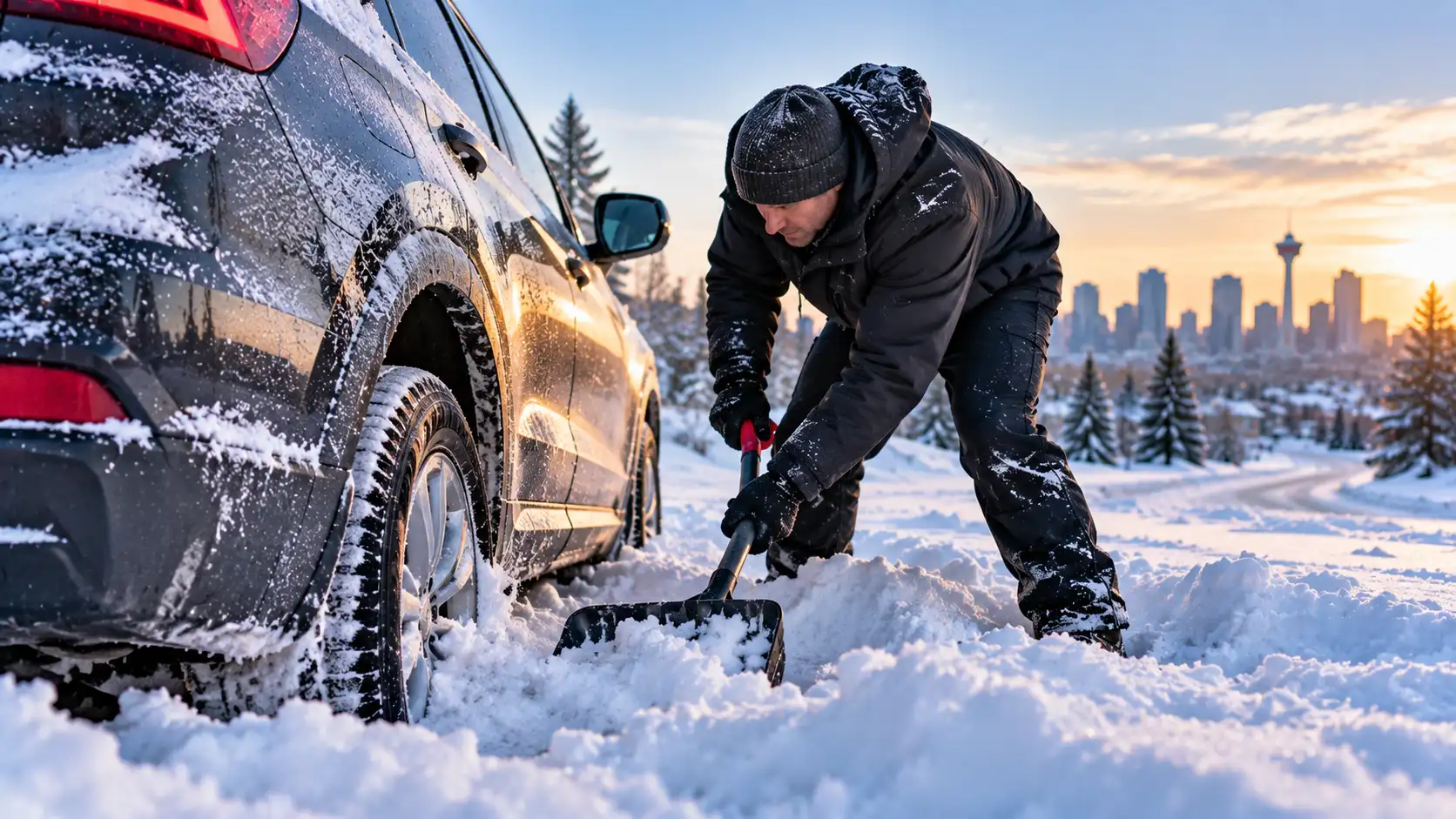
Your tires are spinning, but your car is not moving. Whether you are leaving a snowy driveway or caught in a deep rut, pressing harder on the accelerator can make the situation worse.
If your car gets stuck in snow, stop spinning the wheels, assess your surroundings and only attempt to free it if conditions are safe. Clearing snow and improving traction may help in a driveway or quiet parking area. A vehicle stuck in a ditch, near moving traffic or during severe weather needs professional assistance.
Here is what Calgary drivers should do.
1. Check Whether It Is Safe to Get Out
Before trying to move the car, check for traffic, poor visibility, steep ground and nearby obstacles.
Turn on your hazard lights if your vehicle presents a roadside hazard. Check that everyone inside is uninjured.
Call emergency services if someone is hurt or there is immediate danger. For a vehicle stuck off the road without an immediate emergency, contact roadside assistance.
During a storm, staying inside generally provides shelter, provided the vehicle is not at risk of being struck. Avoid walking away into blowing snow to look for help.
2. Stop Spinning the Tires
When the wheels spin without moving the vehicle, more acceleration usually does not help. It can dig the tires deeper and place unnecessary strain on the vehicle.
Release the accelerator and pause. Avoid high engine speeds or repeated attempts that produce no progress.
Keep other people away from the wheels and the vehicle’s intended path. A tire can throw loose material, and the car may move suddenly when it finds grip.
3. Clear Snow Around the Tires
If you are in a safe, sheltered location, switch the vehicle off and secure it against movement before stepping out.
Use a shovel to clear a short path in front of and behind the tires. Remove snow that is blocking the direction you want to travel.
Check whether packed snow is supporting the underside of the vehicle. If the car is resting on a snowbank, the tires may not have enough contact with the ground. More acceleration will not solve that problem.
Do not crawl underneath the vehicle or attempt heavy digging in extreme cold. Call for assistance if freeing it would require strenuous work or unsafe access.
4. Keep the Exhaust Outlet Clear
Before running a gasoline or diesel engine, make sure snow is not blocking the tailpipe or trapping exhaust around the vehicle.
Blocked exhaust can allow dangerous carbon monoxide to enter the cabin. Check again if drifting snow continues to build up. If you cannot safely keep the exhaust clear, do not run the engine.
Government of Canada winter guidance specifically advises stranded drivers to keep the tailpipe clear of snow and ice.
5. Improve Traction Before Trying Again
On level ground in a safe location, sand or purpose-built traction boards may help the tires grip.
Place traction material where the driven tires need to travel, following the equipment instructions. Keep everyone clear before making another attempt.
Then apply the accelerator gently. If the tires immediately spin again, stop and reassess rather than pressing harder.
Avoid putting your hands near a tire while someone is operating the vehicle.
6. Follow Your Vehicle’s Snow-Recovery Instructions
Some vehicles have a snow mode or specific settings for getting unstuck. Others permit limited rocking between forward and reverse.
Check the owner’s manual before changing traction-control settings or attempting to rock the car.
If rocking is permitted:
- Stop the vehicle and wheels completely before changing direction.
- Use light acceleration.
- Follow the manufacturer’s temperature and time limits.
- Stop if there is no progress, a warning appears or you notice a burning smell.
Ford’s guidance for certain vehicles warns that prolonged rocking can damage the transmission or tires and cause overheating. The procedure is not suitable for every vehicle or situation.
Do not automatically switch traction control off. Use the manufacturer’s recommended recovery setting and restore normal settings once free.
When Should You Call Roadside Assistance?
Stop trying to free the vehicle yourself when:
- It is stuck in a ditch, on a slope or near moving traffic.
- Snow is packed underneath and the wheels cannot gain traction.
- Visibility is poor or the cold makes working outside unsafe.
- You notice smoke, a burning smell or a vehicle warning.
- A few gentle attempts have not helped.
Tell the operator your location, whether anyone is injured, and how the vehicle is positioned.
Avoid improvised towing with ropes or attaching a strap to a bumper or suspension part. Vehicle recovery requires suitable equipment and approved attachment points. AMA offers winching assistance for vehicles stuck in situations such as snowy ditches.
How to Stay Safe While Waiting
If your vehicle is in a safe position, use it as shelter and keep your phone available for the recovery operator.
Put on warm layers and use blankets from your emergency kit. Run the engine as little as possible, only when the exhaust can remain clear, and keep a sheltered window slightly open for ventilation. An open window does not make a blocked exhaust safe.
Avoid exhausting yourself by repeatedly shovelling or pushing in severe cold.
What Should You Check After Getting Unstuck?
Once free, stop somewhere safe before continuing your journey.
Look for visible tire damage, loose parts, fluid leaks or warning lights. Pay attention to new vibration, pulling, unusual noises or changes in braking and steering.
If you hit a curb or slid into a ditch, have the vehicle checked even if it still moves. Our guide to pothole damage to tires and suspension explains why impacts can affect these components.
Persistent handling changes may need a suspension inspection and repair assessment. If the vehicle does not feel safe to control, arrange towing.
Prepare Before Your Next Winter Drive
Keep a small shovel, traction material, warm clothing, blankets, a flashlight and a phone charger in your vehicle.
Check tire condition and pressure regularly, and avoid driving into snow deeper than your vehicle can safely clear. All-wheel drive can help you get moving, but it does not prevent you from becoming stuck.
A winter car service appointment is a useful opportunity to discuss tires, battery condition and other seasonal maintenance needs.
Frequently Asked Questions
Should I keep accelerating if my car is stuck?
No. If the tires spin without moving the car, release the accelerator. Clear the path and improve traction before making another gentle attempt.
Should I turn traction control off?
Only if your owner’s manual recommends it for getting unstuck. Different vehicles use different recovery procedures.
Can getting stuck in snow damage my car?
Yes. Excessive wheelspin, prolonged rocking, impacts and improper towing can cause damage. Watch for warning lights, unusual smells and handling changes afterward.
Should I walk to find help during a snowstorm?
Generally, staying with the vehicle is safer if it provides shelter and is not exposed to an immediate hazard. Contact assistance and share your location rather than walking into poor visibility.
Get Your Vehicle Checked After a Winter Incident
If your car develops vibration, steering problems or unusual noises after getting stuck, Heritage AutoPro can inspect the concern and explain the next steps.
Contact Heritage AutoPro or call 403-253-1210 to arrange an appointment at our Calgary shop near Chinook Centre.