



Why the Tire Pressure Light Comes On in Cold Weather
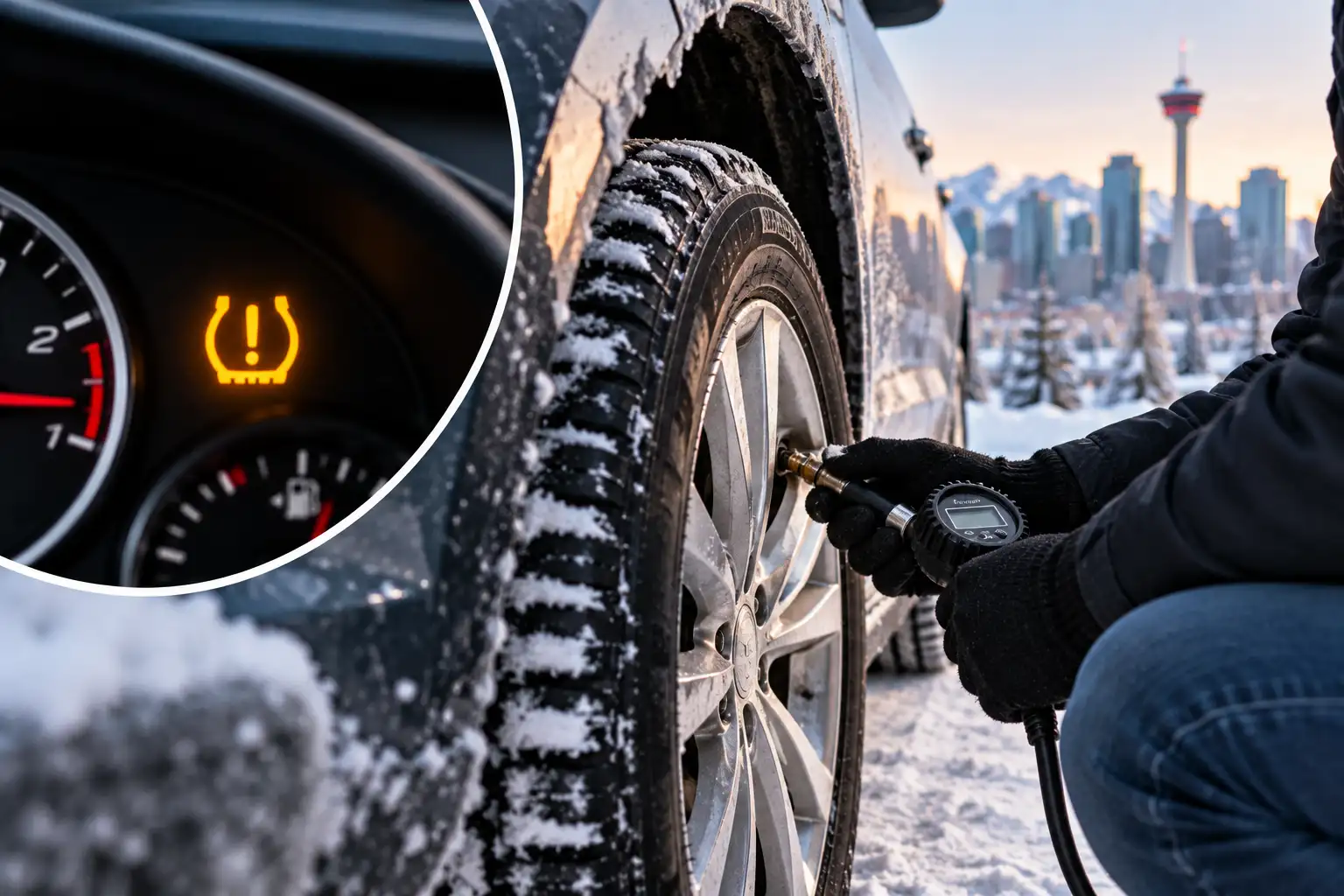
The first cold morning of the season often brings an unwelcome dashboard symbol: the tire-pressure monitoring system warning light. A sudden temperature drop can lower the pressure in all four tires enough to trigger the alert, even when no tire is visibly flat.
Cold weather is a common explanation, but it should not be assumed automatically. The warning can also point to a puncture, leaking valve, damaged wheel, or faulty sensor. Checking the pressure promptly is the only reliable way to separate a seasonal pressure change from a developing tire problem.
Why Tire Pressure Falls in Cold Weather
Air contracts as it cools. Transport Canada notes that tire pressure drops by about 7 kPa, or 1 psi, for every 5 C decrease in temperature. A tire set correctly during a warm afternoon can therefore be several psi low after a sharp Calgary cold front.
Tires also lose a small amount of air naturally over time. When normal air loss combines with a temperature drop, the pressure may cross the monitoring system’s warning threshold.
What the TPMS Light Actually Measures
Vehicles use one of two common monitoring designs. A direct system uses a pressure sensor in each wheel. An indirect system compares wheel-speed information from the anti-lock braking system because an underinflated tire has a slightly different rolling diameter.
The warning tells you that the system detected low pressure or a monitoring fault. It does not measure tread depth, confirm that a tire is safe, or identify every type of damage. A visual inspection and manual pressure check are still necessary.
What to Do When the Light Comes On
Start with these checks before continuing a normal drive:
1. Look at all four tires from a safe location. If one tire is visibly low, damaged, or separating from the rim, do not continue driving on it.
2. Measure each tire with a reliable gauge when the tires are cold. A tire is considered cold after the vehicle has been parked for at least three hours or driven less than about 2 km.
3. Use the recommended pressure on the driver’s door placard or in the owner’s manual. The number on the tire sidewall is a maximum rating, not the routine inflation target.
4. Inflate low tires to the vehicle specification and replace each valve cap.
5. Follow the owner’s manual if the monitoring system needs a reset or relearn procedure.
If pressure drops again, schedule a professional tire repair inspection. Repeatedly adding air without finding the leak can allow a puncture or wheel problem to worsen.
A Steady Light and a Flashing Light Can Mean Different Things
A steady warning usually means at least one tire is below the system’s threshold. A light that flashes before remaining on may indicate a monitoring-system fault, although the exact display varies by vehicle. Sensor batteries can fail, sensors can be damaged during tire service, and seasonal wheel sets may require programming or relearning.
Consult the owner’s manual for the symbol used by your vehicle. If the light remains on after all tires are adjusted correctly, the system should be tested.
Why the Light May Appear After a Seasonal Tire Change
Winter wheels may use a second set of pressure sensors. If the vehicle does not recognize them, the warning can stay on even when inflation is correct. Other possibilities include:
- A sensor was not installed in the seasonal wheel set
- A sensor battery has expired
- The vehicle requires a relearn procedure
- A sensor was damaged or a valve is leaking
- The wheels or sensors are incompatible with the vehicle
Professional tire sales and installation service should account for tire size, wheel fitment, sensor compatibility, balancing, and inflation.
When Low Pressure Becomes a Safety Concern
Underinflation allows the tire to flex more than intended. That can create excess heat, reduce steering response, increase shoulder wear, and raise fuel consumption. A severely underinflated tire can be damaged internally even if it is later reinflated.
Do not rely on appearance alone. Radial tires can look normal while being several psi low. Check pressure monthly, before long highway trips, and after large temperature changes.
When Alignment or Balancing Should Also Be Checked
Low pressure does not directly change wheel alignment, but unusual tire wear may involve more than inflation. If you see feathering, wear on one edge, steering-wheel vibration, or pulling, book a tire balancing and wheel alignment assessment. Correcting the cause helps protect the tread after pressure is restored.
Cold Weather TPMS Questions
Will the TPMS light turn off after the tires warm up?
It may turn off as pressure rises during driving, but that does not mean the cold pressure is correct. Adjust the tires using a cold reading and the specification on the vehicle placard.
Should I inflate tires to the number on the sidewall?
No. Use the vehicle manufacturer’s recommended cold pressure. The sidewall number identifies a maximum tire rating and is not the normal target for the vehicle.
Why does only one tire keep losing pressure?
A single recurring low tire may have a puncture, valve leak, bead leak, wheel damage, or another fault. It needs inspection rather than repeated topping up.
Does every spare tire have a pressure sensor?
No. Monitoring coverage varies by vehicle. Check the spare manually and follow the owner’s manual for its required pressure.
Schedule Tire Service Near Chinook Centre
If the warning returns, one tire loses pressure faster than the others, or the system remains on after correct inflation, Heritage Auto Pro can inspect the tire, wheel, valve, and related components. Book tire service in Calgary or call 403-253-1210.