



Why Is Your Car Making a Squealing Noise on Cold Mornings?
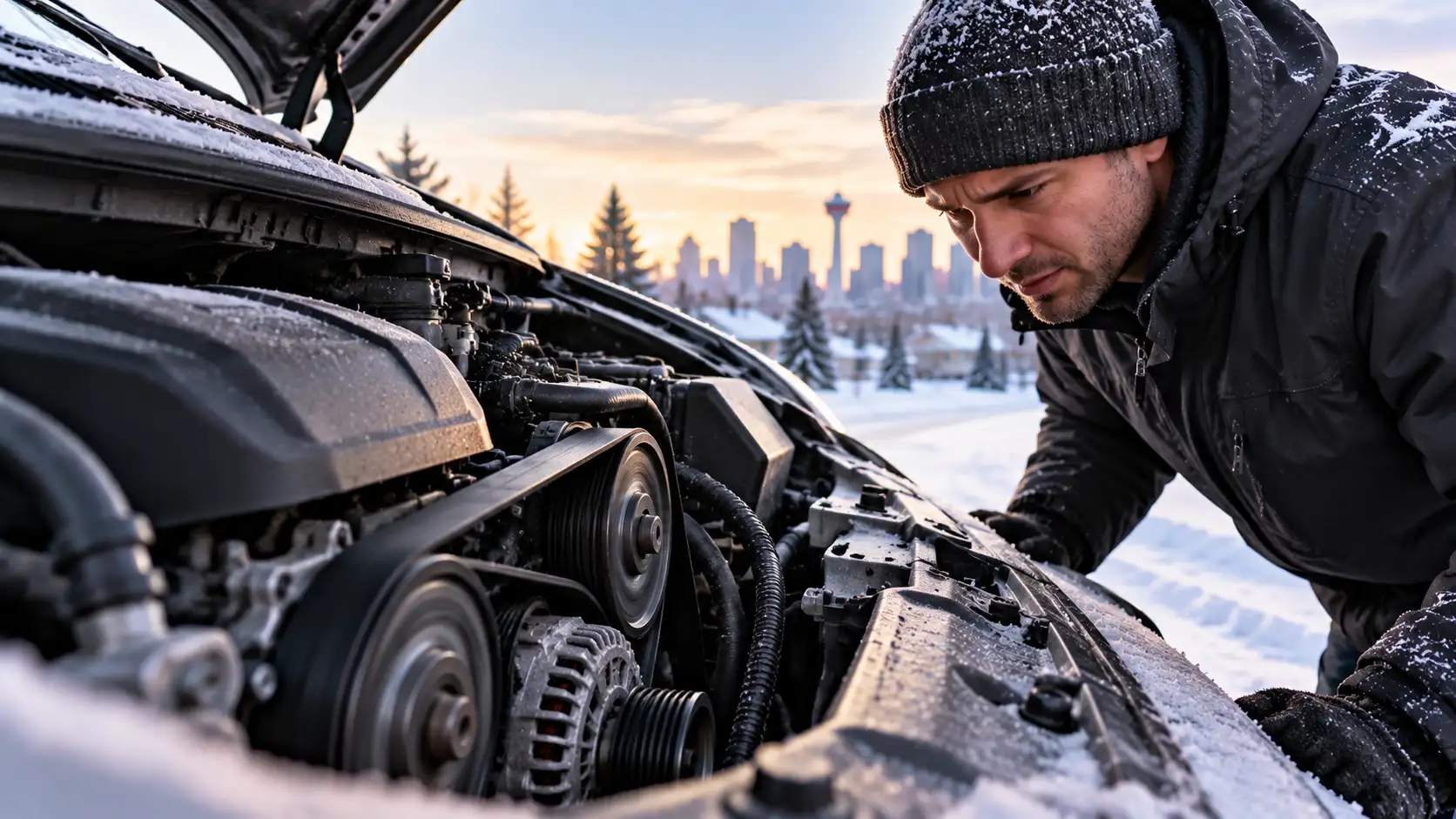
You start your car on a cold Calgary morning and hear a sharp squeal from under the hood. It may disappear within seconds or continue as you pull away. Sometimes, the sound only happens when you apply the brakes.
A squealing noise on cold mornings can come from a slipping accessory belt, a worn tensioner or pulley, or moisture on the brakes. When the noise happens is one of the most useful clues.
Cold weather can make an existing problem more noticeable. A sound that disappears after warming up still deserves attention if it keeps returning.
Does the Noise Happen at Startup or While Braking?
Before assuming a belt needs replacing, notice when you hear the sound.
- Immediately after starting: The accessory belt system or a belt-driven component may be involved.
- When engine speed changes: A belt, tensioner or pulley may need checking.
- Only when applying the brakes: The sound is more likely related to the brakes.
- When turning the steering wheel: On vehicles with hydraulic power steering, the pump or its drive system may be involved.
These patterns help guide an inspection, but sound alone cannot confirm which part is faulty.
1. The Serpentine Belt May Be Slipping
Many gasoline and diesel vehicles use a serpentine belt to drive accessories such as the alternator and air-conditioning compressor. Depending on the engine, it may also drive other components.
If the belt cannot grip properly, it can produce a high-pitched squeal. Cold or damp conditions may make the noise more noticeable during startup.
Wear, contamination or incorrect tension can contribute. Replacing the belt without checking the rest of the system may leave the underlying problem unresolved.
Heritage AutoPro’s drive belt inspection and replacement service includes checks of related tensioners and pulleys.
2. A Tensioner or Pulley May Be Worn
The tensioner keeps the accessory belt tight enough to work correctly. Pulleys guide the belt around the engine’s accessories.
A weak tensioner or failing pulley bearing can create squealing or other belt-area noise. Gates identifies weak tensioner spring force and pulley-bearing failure as possible causes of excessive noise.
This is why a new belt is not always the complete repair. A technician needs to check how the belt is supported and tensioned.
3. Moisture May Be Affecting the Brakes
If the squeal happens during the first few brake applications, the brakes may be the source.
Overnight moisture can leave a thin layer of surface rust on brake rotors. This may cause a brief squeak or scraping sound that clears as normal braking removes the surface layer.
However, noise that continues, becomes louder or happens throughout the drive should not be blamed on the weather.
Book a brake inspection in Calgary if you notice persistent squealing, vibration or changes in stopping performance.
4. Brake Pads May Be Warning You About Wear
Some brake pads have a small metal wear indicator. When the pad becomes thin, this indicator can contact the rotor and produce a squealing sound.
Although you may first notice it on a quiet morning, the problem is not necessarily caused by cold temperatures.
A brake inspection can distinguish ordinary surface moisture from worn pads or another brake issue. Brembo notes that acoustic wear indicators can produce a squeal when pads become too thin.
Is It the Timing Belt or the Serpentine Belt?
These belts perform different jobs.
The serpentine belt drives engine accessories. The timing belt, where fitted, keeps internal engine components moving in the correct sequence.
A startup squeal does not automatically mean the timing belt needs replacing. The noise should be located before deciding on a repair.
Timing-belt maintenance should still follow the manufacturer’s schedule, even when there is no noise. Some engines use a timing chain instead.
What Should You Do When You Hear a Squeal?
A few simple observations can help your technician:
- Note when it happens. Is it at startup, during acceleration, when turning or while braking?
- Notice how long it lasts. Does it stop after a few seconds or continue throughout the trip?
- Check for warning lights. Record any battery, temperature or brake warnings.
- Mention recent work. Tell the shop if a belt, battery, alternator or brake component was recently replaced.
- Record the sound safely. A short recording while parked may help if the noise disappears before your appointment.
Keep hands, clothing and tools away from moving belts and fans. Do not spray lubricant or belt dressing onto the belt to silence it.
If the sound only happens after the car has sat overnight, tell the shop when booking. They may need to assess it from cold.
When Should You Stop Driving?
Pull over safely and switch off the engine if squealing comes with overheating, smoke, a strong burning smell or suddenly heavy steering. Arrange assistance rather than continuing to test the vehicle.
A battery warning light alongside belt noise also needs prompt attention. Depending on the engine layout, a failed accessory belt can affect charging, cooling or steering assistance.
For brake-related noise, stop driving if braking becomes weak, the pedal feels abnormal or you hear severe grinding. Have the vehicle recovered if it cannot be driven safely.
Can You Prevent Cold-Morning Squealing?
You cannot prevent every noise, but routine checks can identify wear before a breakdown.
- Follow the vehicle’s belt and maintenance schedule.
- Have fluid leaks checked before they contaminate nearby parts.
- Mention recurring sounds during service.
- Arrange brake checks when noise persists.
- Avoid ignoring a noise simply because it disappears when warm.
During a routine car maintenance appointment, share any changes you have noticed since colder weather began.
Frequently Asked Questions
Is a brief squeal at startup normal?
A brief sound may be related to cold or damp conditions, but repeated startup squealing can indicate a belt-system problem. Have it checked if it keeps returning or gets worse.
Will warming up the car fix the noise?
Warming may make the sound disappear temporarily. It does not repair a worn belt, weak tensioner or failing bearing.
Does a squealing belt always need replacing?
No. The belt may be worn, but tension, alignment, contamination or a related component can also be responsible. The complete belt system needs assessment.
Why do my brakes squeak only in the morning?
Moisture and light surface rust can cause temporary noise during the first few stops. Persistent noise or any change in braking needs an inspection.
Get Cold-Morning Car Noises Checked in Calgary
A recurring squeal is easier to investigate when you can describe exactly when it happens. Heritage AutoPro can inspect the relevant belt, pulley or brake components and explain the findings.
Contact Heritage AutoPro or call 403-253-1210 to book an appointment at our Calgary shop near Chinook Centre.