



Why Fuel Economy Drops in Winter in Calgary
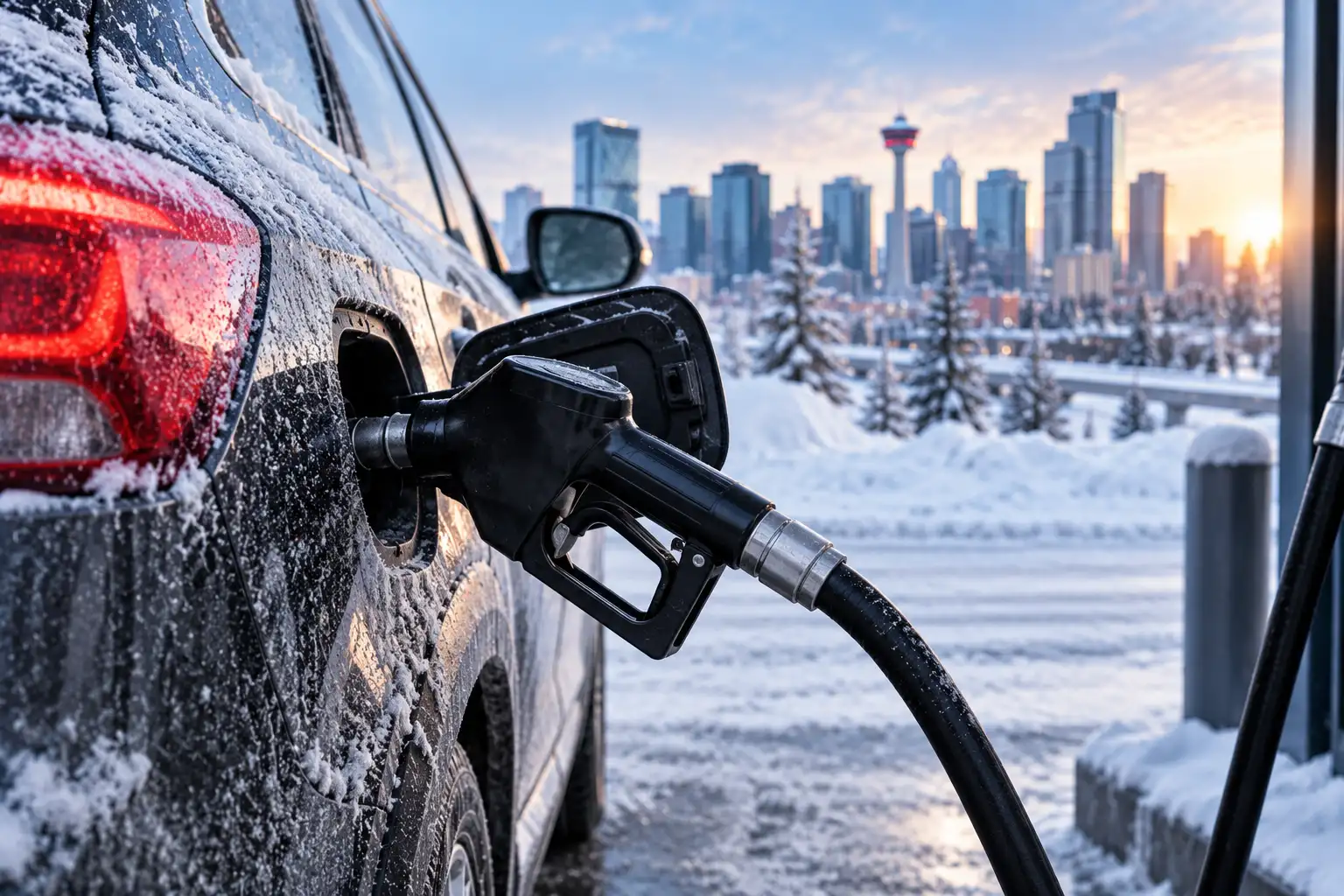
Many Calgary drivers notice that a tank does not last as long once winter arrives. The change is real. Cold engines, denser air, low tire pressure, snow, short trips, idling, and winter accessories all require additional energy.
Natural Resources Canada reports that a temperature drop from 24 C to 7 C can increase fuel consumption during urban trips by about 12 to 28 percent. The effect varies by vehicle, trip length, road condition, and driving style, and it can become more noticeable at lower temperatures.
A seasonal change is normal. A sudden or unusually large increase can also point to a tire, brake, sensor, ignition, fuel, or engine problem that needs diagnosis.
A Cold Engine Uses More Fuel
An engine is designed to operate within a specific temperature range. During a cold start, the oil is thicker, internal friction is higher, and the fuel-management system must support stable running while the engine and emission-control components warm up.
The shorter the trip, the larger the warm-up penalty becomes as a share of the drive. A five-minute errand may end just as the engine approaches efficient operation. Several separate errands can therefore consume more fuel than one combined route.
Idling Produces No Travel
An idling engine burns fuel while the vehicle remains stationary. Modern vehicles generally do not need extended idling to warm up under normal conditions. Follow the owner’s manual, clear all windows fully, and drive gently after a brief start-up period when it is safe to do so.
Remote start can be useful for visibility and comfort in severe weather, but long unattended warm-ups increase fuel use. A block heater can reduce cold-start strain when used according to vehicle and equipment instructions.
Tire Pressure Falls With Temperature
Transport Canada states that tire pressure drops by about 1 psi for every 5 C decrease in air temperature. Underinflated tires flex more and increase rolling resistance, which requires additional energy to move the vehicle.
Check tires cold at least monthly and use the pressure shown on the driver’s door placard. If the tires repeatedly lose pressure, arrange an inspection instead of continually adding air. Heritage Auto Pro can help with tire sales and installation when tires are damaged, worn, or unsuitable for the season.
Snow Slush and Ice Increase Resistance
Pushing through snow and slush requires more power than rolling on clean pavement. Wheel slip also wastes energy. Roof snow, packed ice in wheel wells, and heavy snow around the underbody add weight or drag.
Remove accumulated snow safely and keep the vehicle free of unnecessary cargo. Do not compromise traction to chase a small fuel-economy gain. Proper winter tires may have more rolling resistance than a summer-focused tire, but control and braking in cold conditions come first.
Winter Fuel Has Different Properties
Fuel composition changes seasonally to support cold starting and evaporation requirements. Natural Resources Canada notes that a litre of winter gasoline can contain less energy than summer gasoline. This contributes to seasonal consumption changes even when the vehicle is operating normally.
Heaters Defrosters and Electrical Loads Add Demand
Cabin blowers, rear defrosters, heated seats, heated steering wheels, headlights, and wipers draw electrical power. The alternator must supply that energy, which adds load to the engine.
Use safety equipment whenever needed. The practical goal is to avoid unnecessary use after windows are clear and the cabin is comfortable, not to reduce visibility or comfort below a safe level.
Winter Aerodynamics Can Be Worse
Cold air is denser than warm air, so the vehicle must work harder to move through it at highway speed. Roof boxes and racks add further drag. Remove seasonal carriers when they are not needed.
Headwinds and dense air can make one highway trip look much worse than another, so compare fuel economy across several tanks rather than judging one drive.
Maintenance Problems Become More Noticeable in Winter
Cold weather can expose conditions that were marginal in summer. Examples include:
- Low tire pressure or uneven alignment
- A thermostat that keeps the engine too cool
- Worn spark plugs or ignition coils
- A restricted air filter
- A sensor reporting incorrect temperature or airflow data
- A dragging brake caliper
- Incorrect oil viscosity
- Fuel-system or emission-control faults
A car tune up in Calgary can review plugs, filters, fluids, ignition parts, and performance concerns. If the decline is sudden or accompanied by a warning light, auto diagnostics can identify stored faults and test the related systems.
Practical Ways to Reduce Winter Fuel Use
- Combine short errands so the engine completes fewer cold starts.
- Remove unnecessary cargo, roof racks, and carriers.
- Check tire pressure after major temperature drops.
- Use the engine oil grade specified by the manufacturer.
- Avoid extended idling and aggressive acceleration.
- Clear snow and ice before driving.
- Keep filters, spark plugs, and fluids on schedule.
- Use a block heater with an appropriate timer when recommended.
- Investigate warning lights, rough running, fuel smells, or a sudden consumption increase.
A winter car service package can check tires, battery condition, fluids, belts, hoses, filters, lights, wipers, brakes, and other seasonal items in one visit.
Winter Fuel Economy Questions
How much worse can fuel economy get in winter?
Natural Resources Canada cites an estimated 12 to 28 percent increase in urban fuel consumption when temperature falls from 24 C to 7 C. Short trips, colder temperatures, snow, idling, and vehicle condition can change the result.
Does idling warm the vehicle more efficiently than driving?
No. Idling uses fuel without moving the vehicle. After a brief start-up period, gentle driving generally warms a modern vehicle more efficiently. Follow the owner’s manual and allow enough time to clear all glass safely.
Can winter tires reduce fuel economy?
Tread design and compound can increase rolling resistance compared with some warm-weather tires. Incorrect pressure also matters. The winter tire’s safety benefit in cold, snowy, and icy conditions should remain the priority.
When is poor winter fuel economy a repair concern?
Arrange service if consumption changes suddenly, the engine runs rough, a warning light appears, the temperature gauge remains unusually low, a brake drags, tires lose pressure, or you smell fuel.
Book Winter Maintenance in Calgary
If fuel use has increased more than expected or the vehicle is due for seasonal maintenance, Heritage Auto Pro can inspect the systems that affect cold-weather efficiency and reliability. Book service near Chinook Centre or call 403-253-1210.