



Why Does Your Car Struggle to Start in Cold Weather?
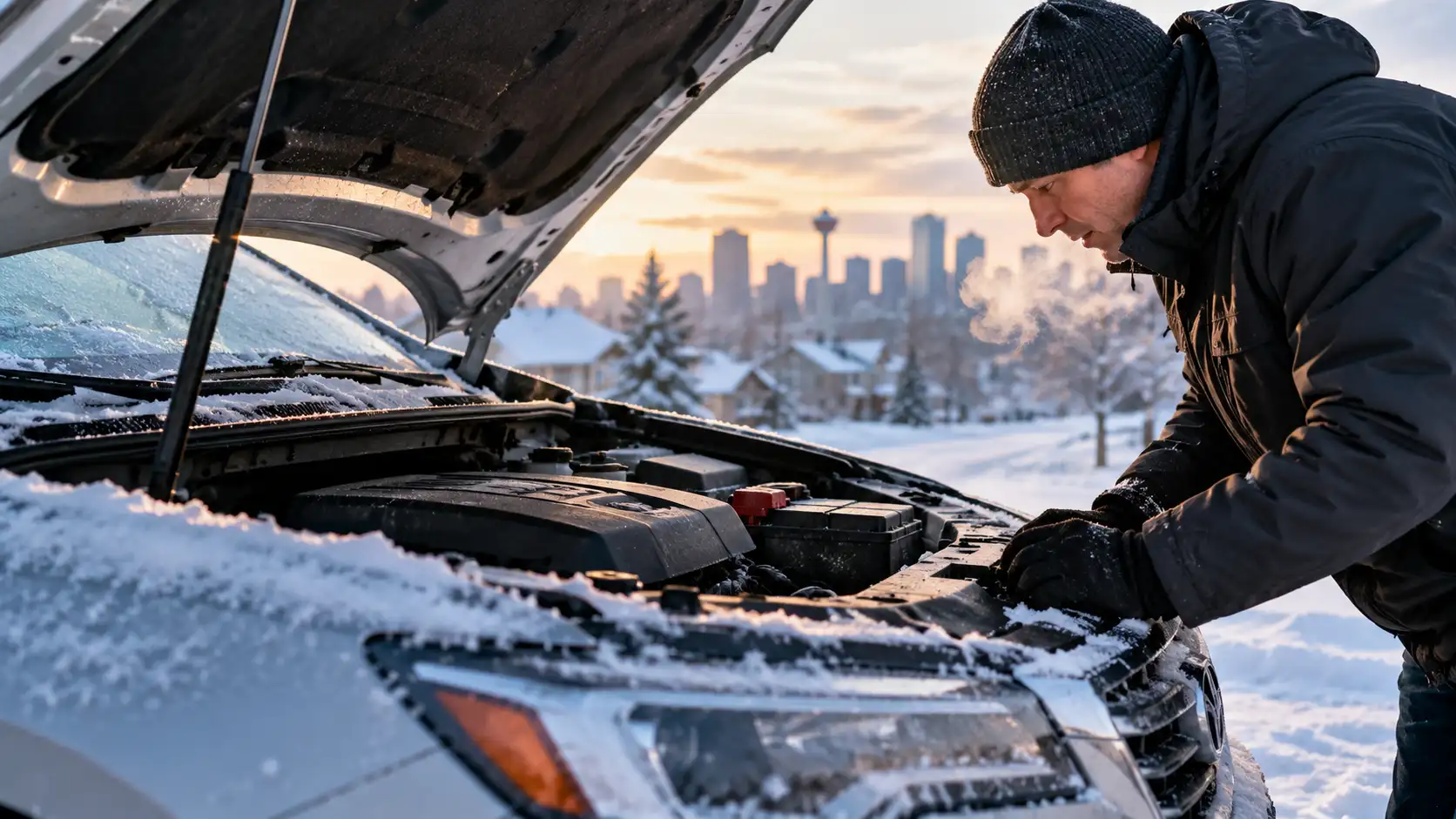
You head outside on a cold Calgary morning, turn the key or press the start button, and your engine struggles to turn over. It might start slowly, make a clicking sound or refuse to start at all.
Cold weather makes starting harder because your battery supplies less power while your engine needs more effort to turn. Thickened engine oil, a low battery charge and existing electrical problems can make things worse.
Here are the common reasons your car struggles to start in cold weather and what you can do about them.
1. Your Battery Has Less Power in the Cold
Your car battery relies on chemical reactions to produce electricity. These reactions slow down as temperatures fall, reducing the power available to start the engine.
A healthy, fully charged battery may handle the cold without trouble. An ageing or partly discharged battery has less power to spare and may struggle when temperatures drop.
Signs of a weak battery can include:
- The engine turns over more slowly than usual.
- Dashboard lights dim noticeably while starting.
- You hear rapid clicking.
- Your vehicle repeatedly needs a boost.
These symptoms do not always mean you need a new battery. Testing can help determine whether the battery is worn out, undercharged or affected by another problem.
2. Cold Engine Oil Makes Starting Harder
Engine oil becomes thicker in cold temperatures. This creates more resistance inside the engine, making the starter work harder to turn it over. At the same time, the battery has less power available.
Using the oil grade specified by your vehicle manufacturer helps support proper cold-weather operation. Do not switch to a different grade simply because winter has arrived.
Check your owner’s manual and keep oil changes up to date. If you are unsure which oil your vehicle needs, ask during your next car maintenance appointment.
3. Short Trips Can Leave Your Battery Undercharged
Do you mostly drive a few minutes to work, school or the grocery store? Frequent short trips can contribute to winter starting problems.
Starting the engine uses battery power. The charging system then needs time to replace that energy while the engine runs. Short journeys, combined with winter electrical demands such as the blower and rear-window defroster, may leave the battery undercharged.
Over time, this can mean less power available for the next cold start.
If your driving is mostly short trips, ask a technician whether a compatible battery maintainer would help. A longer drive will not fix a failing battery or faulty charging system.
4. Poor Battery Connections Can Limit Power
Even a good battery can struggle to start a car if its connections are loose or corroded.
The starter needs a strong flow of electrical current. Resistance at a battery terminal, cable or ground connection can interrupt that flow. Cold weather may expose a connection problem that was less noticeable during warmer months.
A technician can check the connections alongside the battery, helping avoid replacing a part that is still working.
5. Cold Weather Can Expose Existing Problems
Sometimes, winter reveals a problem that was already developing.
A worn starter, charging-system fault or engine-related issue can make starting unreliable. If the engine turns at its usual speed but does not start, the cause may involve fuel delivery, ignition or another engine-control system.
Pay attention to what happens when you try to start:
- Does the engine turn slowly?
- Do you hear clicking?
- Does it turn normally without starting?
- Does the problem happen only after parking overnight?
These details help narrow down the cause. For a closer look at the differences, read our battery, alternator or starter guide.
What Should You Do If Your Car Will Not Start?
Avoid repeatedly trying to force the engine to start. Long or repeated attempts can drain the battery further and overheat the starter.
Instead:
- Turn off unnecessary accessories. Switch off heated seats, the radio and other optional electrical loads before trying again.
- Follow your owner’s manual. Use the recommended starting procedure and allow the specified pause between attempts.
- Notice the symptoms. Clicking, slow cranking and warning lights are useful information for your technician.
- Arrange help if it still will not start. Repeated attempts are unlikely to solve an underlying fault.
If a boost is needed, follow the vehicle manufacturer’s instructions. Never attempt to boost a battery that appears frozen, swollen, leaking or damaged.
A successful boost does not confirm that the problem is fixed. If your vehicle needs another boost soon afterwards, have the battery and charging system checked.
How to Help Prevent Cold-Weather Starting Problems
A little preparation can reduce the chance of getting stranded on a freezing morning.
Have the Battery Tested
If starting has become slower or your battery’s condition is unknown, arrange a test before colder weather arrives. Battery age alone does not tell you whether it needs replacing.
Use Your Block Heater as Recommended
If your vehicle has a block heater, use it according to the manufacturer’s instructions. It helps warm the engine, reducing the effort needed for a cold start.
A block heater does not recharge the battery or repair a starting problem. Check the cord for damage and unplug it before driving away.
Keep Up With Scheduled Maintenance
Use the correct engine oil and follow your vehicle’s maintenance schedule. Mention slow starts, warning lights or recent boosts when booking service.
Heritage AutoPro’s winter car service package is a useful starting point for discussing seasonal checks and your vehicle’s needs.
Address Starting Problems Early
A car that struggles today may fail to start during the next cold spell. Getting an occasional slow start checked is easier than dealing with an unexpected breakdown.
Frequently Asked Questions
Why does my car start normally in warm weather but struggle in winter?
Cold temperatures reduce battery performance and make the engine harder to turn. A battery or starting component that is already weak may work in mild weather but struggle in freezing conditions.
Does slow starting always mean I need a new battery?
No. A low charge, poor cable connection, starter problem or incorrect oil grade can also contribute. Testing helps identify the cause before parts are replaced.
Will a block heater help my car start?
A working block heater can make cold starts easier by warming the engine. However, it cannot restore a discharged battery or fix a mechanical or electrical fault.
Should I get my car checked if it starts after a boost?
Yes, especially if it needs repeated boosts. The battery may not be holding a charge, or another issue may be causing it to discharge.
Get Help With Cold Starts in Calgary
If your car is slow to start, clicks on cold mornings or repeatedly needs a boost, Heritage AutoPro can help investigate the cause.
Our shop near Chinook Centre serves Calgary drivers with vehicle diagnostics, repairs and routine maintenance. Contact Heritage AutoPro or call 403-253-1210 to arrange an appointment before your next difficult winter start.