



Why Do Your Car Windows Fog Up in Winter? How to Fix It
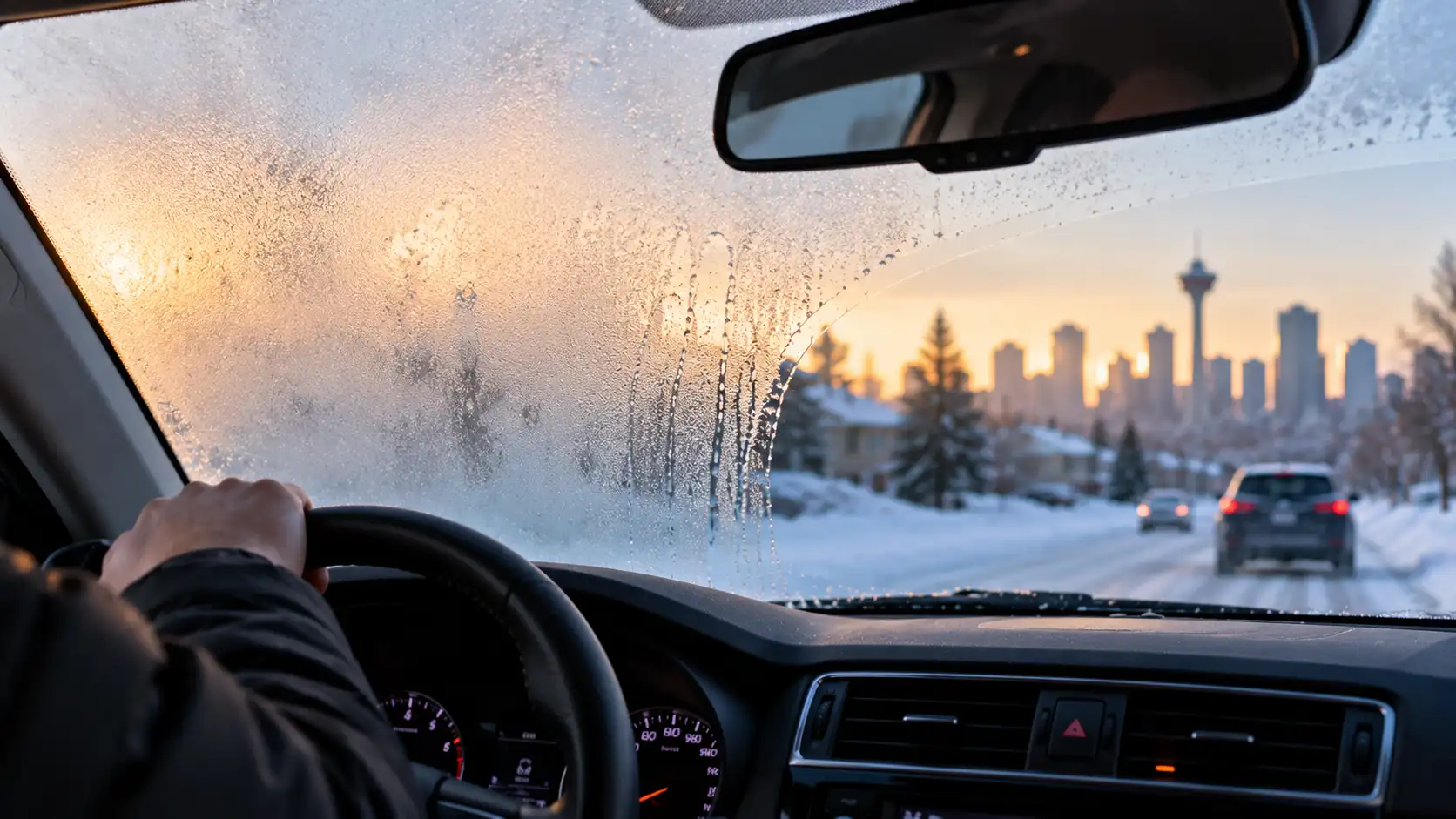
You get into your car on a cold Calgary morning, turn on the heat, and suddenly the windshield becomes cloudy. Sometimes the windows clear quickly. Other times, the fog keeps coming back throughout your drive.
Car windows fog up in winter when moisture inside the cabin condenses on cold glass. Your breath, wet boots and snowy clothing all add moisture to the air. When that humid air meets the cold windows, tiny water droplets form and block your view.
The solution is to warm the glass, remove excess moisture and keep fresh air moving through the cabin.
What Causes Foggy Car Windows in Winter?
A little condensation is common during cold weather. However, certain conditions can make it worse.
Wet Boots, Clothing and Floor Mats
Snow carried into your car melts as the cabin warms up. Water trapped in floor mats, carpets and clothing then adds moisture to the air.
If your windows fog up every morning, check whether the mats and carpet underneath are staying damp.
Passengers Breathing Inside the Car
Everyone inside the vehicle releases moisture when they breathe. With several passengers and the windows closed, humidity can build up quickly.
This is why a windshield may fog more noticeably during a school run or when picking up passengers.
Keeping Air Recirculation Switched On
Recirculation reuses air already inside the cabin. Although useful in some conditions, it can trap moisture during winter.
Switching to fresh-air mode helps replace humid cabin air with outside air, making it easier to clear the glass.
Weak Airflow or Heating Problems
Your defroster needs enough airflow and heat to clear the windshield effectively.
A restricted cabin air filter, blower problem or climate-control fault can reduce performance. If very little air reaches the glass, or the heater stays cold after the engine warms up, the system may need checking.
Heritage AutoPro’s car air conditioning and heating repair service can help identify problems affecting heat, airflow and defrosting.
How to Defog Your Car Windows in Winter
Do not drive until you can see clearly through the windshield and surrounding windows. If fog develops while driving and you cannot maintain visibility, pull over somewhere safe before adjusting the controls.
Follow your vehicle’s owner’s manual. For most vehicles, these steps help:
1. Select the Front Defrost Setting
Choose the windshield symbol or maximum defrost setting. This directs air towards the windshield and, in many vehicles, the front side windows.
Automatic systems may adjust the fan, temperature and air conditioning for you.
2. Use Warm Air and Increase the Fan
For manual controls, select a warm temperature and a strong fan setting. Warm airflow helps heat the glass and clear the condensation.
The air may initially feel cold while the engine warms up.
3. Allow the Air Conditioning to Work
Air conditioning can help remove moisture from the air, even when you want warm air inside the car. Many vehicles switch it on automatically during defrosting.
You can generally use A/C with a warm temperature setting. In very low temperatures, the vehicle may prevent the compressor from operating; this does not automatically mean it is faulty.
4. Turn Recirculation Off
Select outside air instead of continuously circulating damp cabin air. Your vehicle may do this automatically when maximum defrost is selected.
Ford’s climate-control guidance confirms that defrost modes manage airflow towards the glass, with automatic systems controlling related settings.
5. Switch On the Rear Defogger
The rear-window button usually has a rectangular window symbol with rising arrows. It uses heating elements to clear the rear glass.
If needed, briefly opening a side window slightly can also help release humid air, provided conditions allow it.
How to Stop the Windows From Fogging Again
Reducing moisture inside your car can make a noticeable difference.
- Brush snow off your boots before getting in.
- Remove wet items such as towels, clothing and umbrellas after your trip.
- Empty and dry floor mats, and check for damp carpet underneath.
- Clean the inside of the windows with an automotive glass cleaner suitable for your tint.
- Keep dashboard defrost vents clear of papers, covers and other objects.
- Check the cabin air filter according to your vehicle’s maintenance schedule.
A clean microfibre cloth can remove streaks while parked, but wiping alone will not solve excess cabin moisture. Avoid wiping the windshield with your bare hand, which can leave smears.
During your next car maintenance appointment, mention persistent fogging or any change in airflow.
Is the Fog Inside or Outside the Windshield?
Knowing which side is affected helps you choose the right solution.
Inside condensation needs ventilation, warm airflow and moisture removal. Your windshield wipers cannot reach it.
Outside moisture may clear with the wipers if it is liquid and the blades are free to move. Exterior frost or ice needs the defroster and a suitable scraper.
Never pour hot water onto frozen glass. The sudden temperature change can crack it. Do not operate wipers that are frozen to the windshield.
When Should Persistent Fogging Be Checked?
Occasional condensation does not necessarily mean something is broken. However, arrange an inspection if:
- The windows remain foggy despite using the correct settings.
- Airflow from the defrost vents is weak or absent.
- The heater does not warm up normally.
- Carpets remain wet even after removing snowy footwear and mats.
- Fogging comes with an unusual smell or a persistent film on the glass.
These symptoms can point to excess water entering the cabin or a heating and ventilation problem. A technician can check the cause before recommending repairs.
If you are preparing for colder weather, our winter car service package provides a starting point for discussing seasonal maintenance needs.
Frequently Asked Questions
Should I use hot or cold air to defog my windshield in winter?
Warm air directed at the windshield is generally the right choice for interior winter condensation. Combine it with fresh-air mode and the vehicle’s recommended defrost settings.
Why do my windows fog more when passengers get in?
Passengers add moisture through breathing, wet clothing and snowy footwear. More people can raise cabin humidity quickly, especially with recirculation switched on.
Why is there frost on the inside of my windshield?
Moisture inside the cabin can collect on the glass and freeze overnight. Dry out wet mats and carpets, remove damp items and investigate moisture that keeps returning.
Does fogging mean my car’s air conditioning is broken?
No. Ordinary moisture buildup and incorrect ventilation settings can cause fogging. A fault becomes more likely when the windows remain difficult to clear despite correct operation.
Get Help With Defrosting Problems in Calgary
Clear windows are essential for winter driving. If your defroster struggles, the heater stays cold or moisture keeps returning, Heritage AutoPro can inspect the system and explain what needs attention.
Contact Heritage AutoPro or call 403-253-1210 to book an appointment at our Calgary shop near Chinook Centre.