



When to Install Winter Tires in Calgary
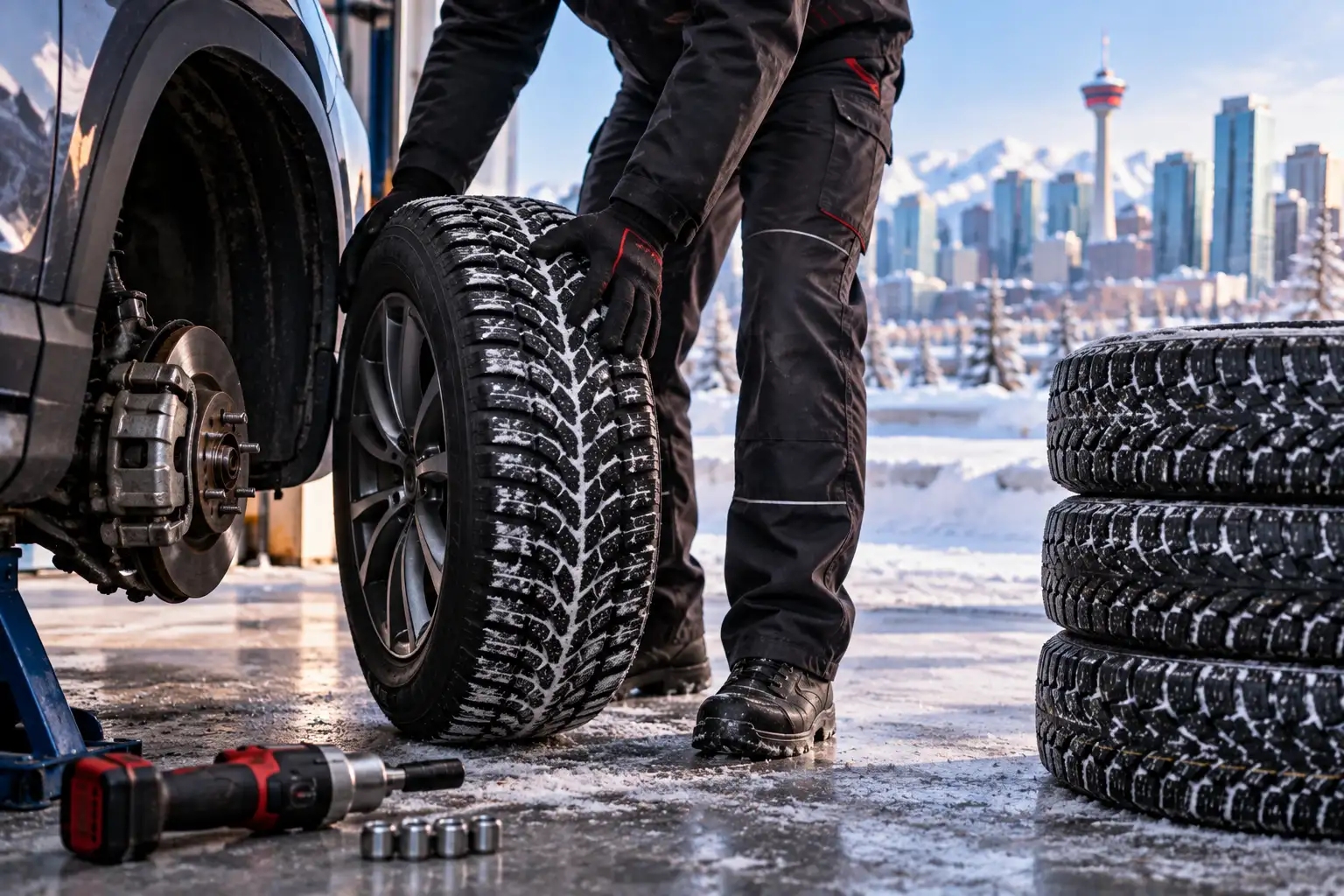
Calgary weather can change quickly in the fall. A warm afternoon can be followed by a frosty morning, and the first snow may arrive before many drivers have booked a tire change. The best time to install winter tires is therefore based on temperature rather than the date of the first snowfall.
For most Calgary drivers, the practical rule is to book a changeover when average temperatures are consistently approaching 7 C or lower. At that point, the rubber compounds used in summer and many all-season tires begin to stiffen. Winter tires remain more flexible in cold conditions, helping the tread maintain contact with dry, wet, snowy, and icy pavement.
If you need help choosing the correct size and type, Heritage Auto Pro provides tire sales and installation in Calgary near Chinook Centre.
Why the 7 C Rule Matters
Many people wait for snow before changing tires, but temperature affects traction before roads turn white. Transport Canada advises that all-season and summer tires begin to lose elasticity below 7 C. That can reduce grip during braking, cornering, and quick steering inputs even when the pavement looks clear.
Calgary’s frequent freeze-thaw cycles make early preparation especially useful. Meltwater can refreeze overnight, shaded sections may remain icy, and bridges can cool faster than surrounding roads. Installing winter tires before the first major storm also helps you avoid the rush that follows a sudden weather warning.
Winter Tire Rules in Alberta
Winter tires are not currently mandatory for most passenger vehicles in Alberta. Alberta Transportation nevertheless recommends using four winter or all-weather tires in severe winter conditions for better traction and control.
Drivers travelling outside Calgary should also check the requirements for their route and destination. Some highways in neighbouring provinces have seasonal winter-tire or chain requirements. Rules can change, so confirm them before a mountain trip.
How to Identify a Winter Tire
Look for the three-peak mountain snowflake symbol on the tire sidewall. This mark shows that the tire meets a defined snow-traction performance requirement. An M+S marking by itself describes tread geometry and does not necessarily provide the same severe-snow rating.
All-weather tires may also carry the mountain snowflake symbol. They can be a reasonable year-round option for some drivers, especially those with lower annual mileage and mostly urban travel. A dedicated winter tire usually offers the strongest cold-weather focus, while an all-weather tire balances winter capability with warm-weather durability. The right choice depends on where, when, and how much you drive.
Install Winter Tires as a Set of Four
Transport Canada recommends installing winter tires on all four wheel positions. Mixing two winter tires with two all-season tires can create an imbalance in traction. One end of the vehicle may grip while the other loses control during braking or cornering.
The four tires should match the vehicle’s required size, load rating, and suitable speed rating. Similar tread depth across the set also helps the vehicle respond predictably. This is particularly important on all-wheel-drive vehicles, which may have manufacturer limits on allowable differences in tire circumference.
Check Tread Depth Before Reinstalling Stored Tires
A tire can still be legal for general road use yet perform poorly in deep snow or slush. Transport Canada advises against using winter tires with less than 4 mm of tread depth in snow-covered conditions. Inspect each tire for:
- Low or uneven tread depth
- Sidewall cracks, cuts, or bulges
- Exposed cords or damaged beads
- Uneven wear along the inner or outer shoulder
- Objects embedded in the tread
- Age-related deterioration
Uneven wear may point to an inflation, alignment, steering, or suspension problem. A tire balancing and wheel alignment service can identify conditions that may shorten the life of a new set.
Check Pressure After the Temperature Drops
Tire pressure falls as outdoor temperature falls. Check pressure when the tires are cold and use the vehicle manufacturer’s specification on the driver’s door label or in the owner’s manual. Do not use the maximum sidewall pressure as the normal target.
Pressure should be checked at least monthly and after major temperature changes. Remember to inspect the spare if the vehicle carries one. A seasonal changeover is also a good time to examine valve stems and confirm that the tire-pressure monitoring system is operating normally.
When to Book a Calgary Winter Tire Change
Book before temperatures remain around 7 C and before the forecast shows the first sustained cold period. For many Calgary drivers, this means arranging service in early to mid-fall rather than waiting for snow. Exact timing changes from year to year, so watch the temperature trend instead of relying on a fixed calendar date.
You can combine the tire change with a winter car service package that checks the battery, fluids, brakes, wipers, belts, hoses, lights, and other cold-weather essentials.
Winter Tire Questions
Is it too early to install winter tires when roads are still dry?
Not if daily temperatures are consistently near or below 7 C. Winter tires are designed for cold pavement, not only snow. Avoid running them through extended warm weather because the softer compound can wear faster.
Can I use only two winter tires on a front-wheel-drive vehicle?
Using four matching winter tires gives the vehicle more balanced traction. Two winter tires can create different grip levels between the front and rear axles, which may make the vehicle less stable.
Are all-weather tires the same as all-season tires?
No. Many all-weather tires carry the three-peak mountain snowflake symbol and are designed for year-round use, including winter conditions. Typical all-season tires are not designed for the same level of severe-snow performance.
Should I get an alignment with new winter tires?
An alignment check is sensible if the old tires have uneven wear, the steering wheel is off-centre, or the vehicle pulls. Correct alignment helps protect the new tires from premature wear.
Book Winter Tire Service in Calgary
Prepare before the first major cold snap. Heritage Auto Pro can inspect your current tires, help you select the right replacement set, install and balance the tires, and check for wear that could affect winter handling. Book tire service near Chinook Centre or call 403-253-1210.