


What Happens If You Drive With Low Coolant in Winter?
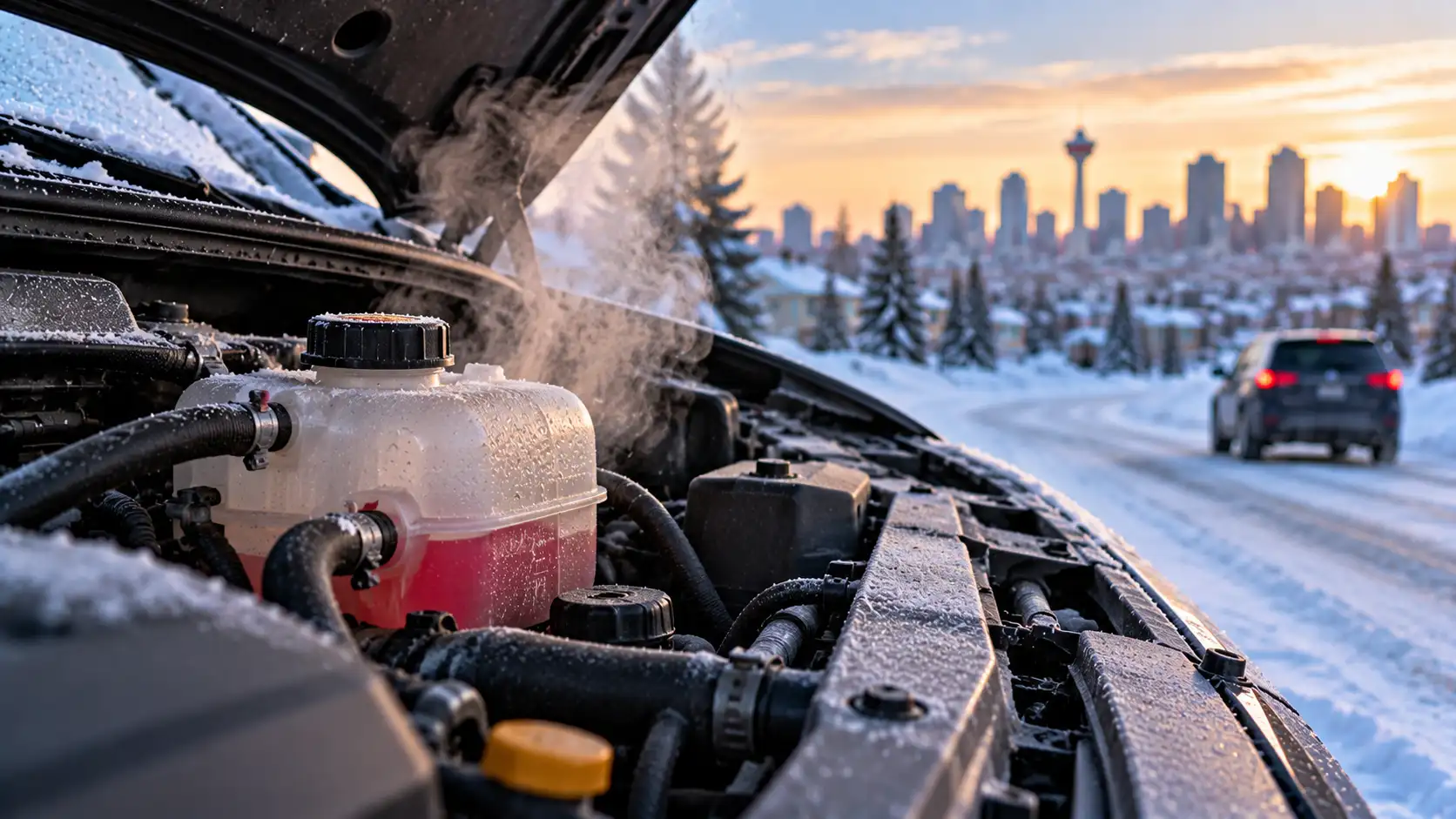
When Calgary temperatures drop below freezing, engine overheating may be the last thing on your mind. But cold weather does not replace your vehicle’s cooling system.
Driving with low coolant in winter can cause engine overheating, weak cabin heat and potentially serious engine damage. Your engine produces heat whenever it runs, and coolant carries that heat away.
If the coolant level keeps dropping, topping it up without finding the cause can allow a small problem to become a much bigger repair.
What Does Coolant Do in Winter?
Coolant circulates through the engine and radiator to help control engine temperature. In most gasoline and diesel vehicles, it also carries heat to the heater core, which helps warm the cabin.
The correct antifreeze-and-water mixture also provides protection against freezing and corrosion.
Your cooling system therefore needs both:
- The correct coolant level to support circulation and heat transfer.
- The correct coolant type and concentration for the vehicle and operating conditions.
A full reservoir does not automatically mean the mixture provides enough freeze protection.
1. Your Engine Can Still Overheat
Freezing outdoor air cannot compensate for insufficient coolant inside the engine.
When the coolant level becomes too low, the system may not transfer heat effectively. Air pockets can also interfere with circulation, allowing parts of the engine to become excessively hot.
Prestone notes that low coolant reduces heat transfer and increases the risk of overheating.
Do not assume an overheating warning is harmless because it is cold outside.
2. Your Heater May Blow Cool Air
In most conventional vehicles, cabin heat comes from hot coolant passing through the heater core.
If there is not enough coolant circulating through it, you may notice:
- Weak heat even after the engine has warmed up.
- Heat that changes between warm and cool.
- Gurgling sounds behind the dashboard.
- Reduced windshield-defrosting performance.
Low coolant is one possible cause, but thermostat, airflow and heater-control faults can produce similar symptoms. Haynes explains that insufficient coolant can prevent proper circulation through the heater core.
If your heater is not working normally, Heritage AutoPro’s car heating and air-conditioning repair service can help identify the cause.
3. Continued Overheating Can Damage the Engine
Driving an overheating vehicle can damage the cylinder head, head gasket and other engine components. Severe overheating may result in major engine repairs.
The risk depends on how much coolant is missing, whether it is still leaking and how hot the engine becomes. There is no reliable “safe distance” that applies to every vehicle.
If you see an overheating warning, steam or a rapidly rising temperature gauge, pull over safely and switch off the engine.
Do not keep driving just because your destination is nearby.
4. Incorrect Top-Ups Can Reduce Winter Protection
Low coolant and weak antifreeze concentration are different problems.
A falling coolant level does not automatically change the remaining mixture’s freezing point. However, repeatedly adding plain water can dilute the antifreeze and reduce protection against freezing and corrosion.
Water alone is unsuitable as a normal winter coolant. Ford warns that using water without the appropriate coolant can result in freezing, corrosion or overheating damage.
Use the manufacturer-approved coolant and mixture. Do not assume that adding more concentrated antifreeze always improves protection.
Why Does the Coolant Level Keep Dropping?
Coolant expands when hot and contracts as it cools, so a warm reading and a cold reading will differ. Always compare levels under the conditions specified in your owner’s manual.
However, a repeated drop below the correct cold level needs investigation.
Possible causes include:
- A leaking hose, radiator or connection.
- A leaking water pump.
- A damaged reservoir or faulty pressure cap.
- A heater-core leak.
- An internal engine leak.
- Trapped air settling after recent cooling-system work.
A leak does not always leave a puddle. Coolant may escape only under pressure, evaporate on hot components or leak internally.
Heritage AutoPro’s auto repair services in Calgary can help investigate recurring coolant loss and related symptoms.
How to Check Your Coolant Safely
For many vehicles, you can inspect the level through a translucent reservoir without removing the cap.
- Park on level ground.
- Switch off the engine and allow it to cool completely.
- Find the correct reservoir using your owner’s manual.
- Compare the level with the specified cold-fill markings.
- Look for visible leaks without reaching near moving components.
Never open a radiator or pressurized coolant-reservoir cap while the system is hot. Hot coolant and steam can escape under pressure and cause serious burns.
If a top-up is appropriate, follow your vehicle’s procedure and use coolant meeting its exact specification. Do not choose by colour alone, mix incompatible products or fill above the recommended level.
What Should You Do If the Reservoir Is Empty?
An empty reservoir needs more attention than a routine top-up.
You cannot tell from the reservoir alone how much coolant remains elsewhere in the system. The vehicle may also require a specific filling and air-removal procedure.
Do not start or continue driving simply to see whether it overheats. Contact a repair shop or roadside assistance for guidance. Arrange towing if there is substantial coolant loss, an active leak or any overheating.
If you suspect the coolant has frozen, do not start the engine.
When Should You Stop Driving Immediately?
Pull over safely, turn off the engine and arrange help if you notice:
- A red temperature warning or gauge entering the hot range.
- Steam coming from under the hood.
- A substantial coolant leak.
- Sudden loss of cabin heat alongside rising engine temperature.
- Overheating accompanied by reduced power or unusual engine noise.
Do not pour cold liquid into a hot engine or remove a hot cooling-system cap. Allow the vehicle to cool and have the cause assessed.
How to Prevent Winter Coolant Problems
Check the coolant level as directed by the manufacturer and have recurring losses investigated promptly.
Before colder weather, ask about checking:
- Coolant concentration and freeze protection.
- Hoses, connections and visible leaks.
- Heating and defrosting performance.
- Whether coolant replacement is due.
A winter car service appointment is a useful time to review these needs alongside your vehicle’s maintenance history.
Frequently Asked Questions
Can my car overheat when it is below freezing?
Yes. The engine still generates heat, and low coolant can prevent the cooling system from removing it effectively.
Can low coolant make my heater blow cold air?
Yes. In vehicles that use engine coolant for cabin heating, insufficient circulation through the heater core can reduce heat. Other faults can cause the same symptom.
Can I just add coolant and keep driving?
A minor top-up may be appropriate when the engine is fully cold and you follow the manufacturer’s instructions. However, repeated coolant loss, an empty reservoir, active leaking or overheating needs assessment before further driving.
Does low coolant always mean a blown head gasket?
No. External leaks and other cooling-system problems are also possible. Testing is needed before identifying the cause.
Have Coolant Loss Checked in Calgary
Low coolant should not become a regular part of your winter routine. If you keep topping up the reservoir, notice weak cabin heat or see a temperature warning, have the cooling system checked.
Contact Heritage AutoPro or call 403-253-1210 to arrange an appointment at our Calgary shop near Chinook Centre. If the engine is overheating or losing coolant rapidly, arrange towing instead of driving.