



Timing Belt and Timing Chain Guide
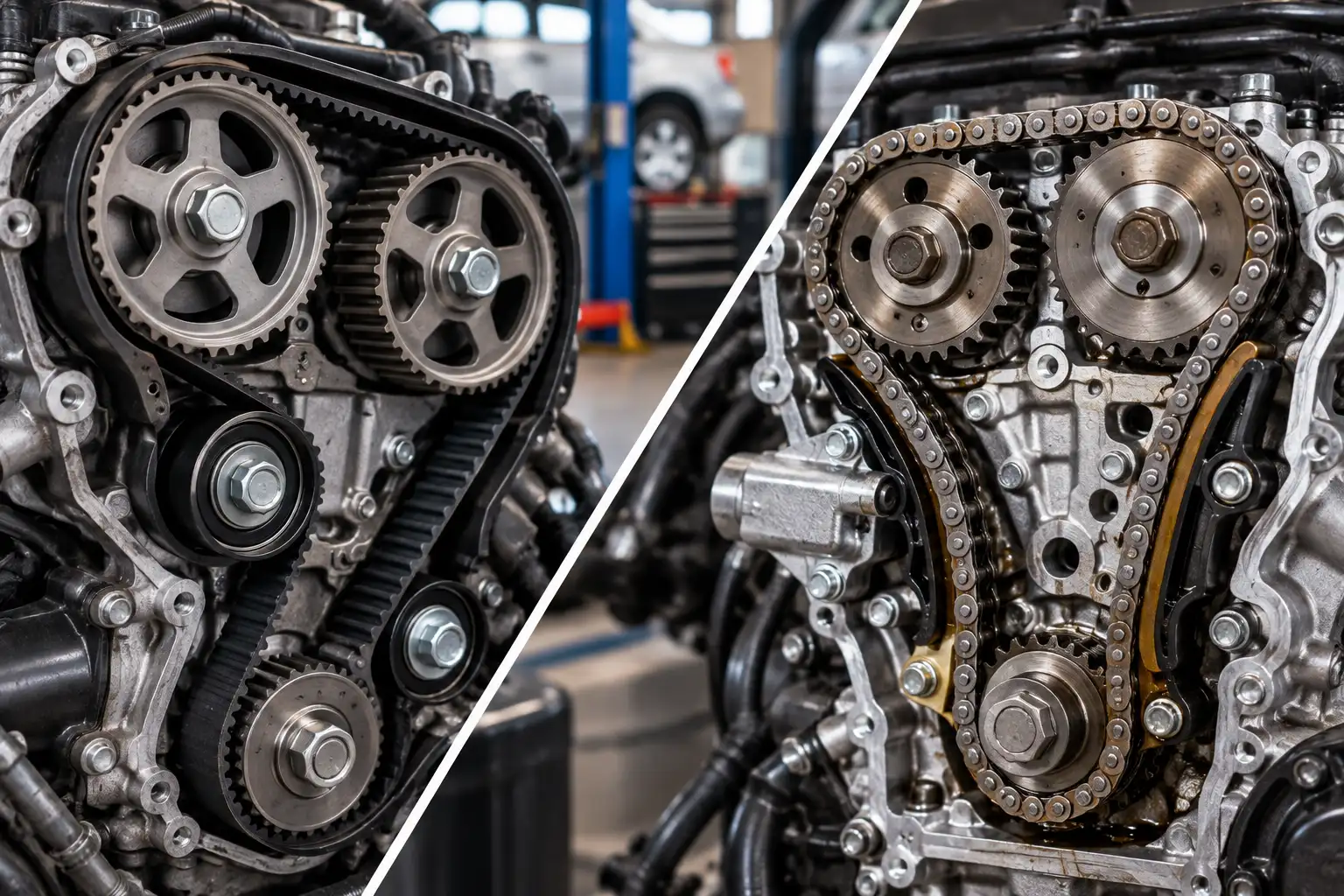
Every four-stroke engine must keep the crankshaft and camshaft synchronized so the valves open and close at the correct time. Depending on the engine, that job is handled by a timing belt, a timing chain, or another manufacturer-specific design.
Belts and chains serve the same basic purpose, but their materials, lubrication, maintenance, and failure patterns differ. Knowing which system your vehicle uses helps you follow the correct service schedule and avoid preventable engine damage. Heritage Auto Pro provides timing belt and auto belt service in Calgary for vehicles with scheduled belt requirements or related symptoms.
Timing Belt Basics
A timing belt is a toothed, reinforced belt that runs behind protective covers. Its teeth keep the crankshaft and camshaft in the correct relationship. The belt usually works with tensioners and idler pulleys, and on some engines it also drives the water pump.
Timing belts operate quietly and with low weight, but the material ages. Heat, mileage, oil contamination, incorrect tension, or a worn pulley can shorten service life. Many manufacturers specify replacement by time, distance, or whichever comes first.
Timing Chain Basics
A timing chain uses metal links and normally operates inside the engine with continuous lubrication from engine oil. Guides and hydraulic or mechanical tensioners control its movement.
Chains often last longer than belts and may not have a routine replacement interval. That does not make them maintenance-free. Low oil, delayed oil changes, incorrect oil viscosity, sludge, worn guides, or a weak tensioner can allow the chain to stretch or move out of position.
Main Differences Between Belts and Chains
| Feature | Timing belt | Timing chain |
| Construction | Reinforced toothed belt | Metal link chain |
| Lubrication | Usually operates dry behind covers | Usually lubricated by engine oil |
| Routine service | Often has a scheduled replacement | Often inspected or serviced when symptoms or data indicate wear |
| Typical noise | Normally quiet | Can rattle when guides, tensioners, oil pressure, or the chain deteriorate |
| Related components | Tensioners, idlers, and sometimes water pump | Guides, tensioners, sprockets, and lubrication system |
| Failure risk | May fail with little warning | May produce noise or timing faults, but sudden failure is still possible |
The actual design and service requirement always depend on the engine. Two models from the same manufacturer can use different systems.
How to Find Out Which System Your Vehicle Uses
Check the owner’s manual, maintenance schedule, reliable service information, or the engine code. A visual guess from the outside is often unreliable because both systems are hidden by covers.
A vehicle identification number can help a shop confirm the engine specification. This is important when a model was offered with more than one engine during the same production year.
Timing Belt Replacement Intervals
There is no universal interval. Some belts are scheduled by kilometres, some by years, and some by both. Severe operating conditions or known component leaks may change the recommendation.
Follow the manufacturer’s schedule rather than waiting for symptoms. A timing belt can look acceptable from a limited inspection and still have internal deterioration. It can also fail without a warning light or obvious noise.
If the service history is unknown, ask a technician to confirm the requirement. This is especially important after buying a used vehicle or importing one with incomplete records.
Timing Chain Warning Signs
A worn chain, guide, or tensioner may produce:
- Rattling during a cold start or at idle
- Camshaft and crankshaft correlation fault codes
- Rough running, misfires, or reduced power
- Metal debris in the oil or filter
- Hard starting or an engine that will not start
- Noise that changes with oil pressure or engine speed
These signs are not exclusive to the timing chain. Accessory belts, pulleys, variable-valve-timing components, and internal engine wear can sound similar. Accurate diagnosis may require scan data, oil-pressure checks, waveform analysis, or physical inspection.
Timing Belt Warning Signs
Possible warning signs include ticking or slapping noise, visible cracking or fraying, oil contamination, coolant leakage near the timing cover, misfires, and a no-start condition. However, many belts provide little useful warning before failure.
Oil or coolant leaks near the belt require attention because contamination can damage the belt material. Replacing the belt without correcting the leak can lead to premature failure.
Why Failure Can Damage the Engine
In an interference engine, the valves and pistons occupy the same physical space at different points in the operating cycle. Correct timing keeps them apart. If the belt breaks or the chain jumps far enough, the pistons can contact open valves.
Damage may include bent valves, damaged pistons, cylinder-head repairs, or the need for full engine repair or replacement. Non-interference engines may avoid internal contact, but the vehicle can still stop without warning and require towing.
Replace Related Components as a System
A timing job may include the belt, tensioner, idler pulleys, seals, hardware, and water pump when the pump is driven by the belt or difficult to access later. The correct scope depends on the engine and component condition.
Gates notes that worn tensioners and idlers can cause looseness, slipping, noise, excess heat, and premature belt failure. Reusing a worn support component can shorten the life of a new belt.
For chains, the repair may involve guides, tensioners, sprockets, seals, and an oil-system concern. The cause of the wear should be addressed rather than replacing only the noisiest part.
Oil Maintenance Matters Most for Timing Chains
Timing-chain tensioners and variable-valve-timing components often depend on clean oil at the correct pressure. Skipping oil changes, using an unsuitable viscosity, or running the engine low can accelerate wear.
A regular car tune up and maintenance review helps match service to the vehicle’s mileage, operating conditions, and history.
Timing System Questions
Is a timing chain designed to last forever?
No component should be assumed to last forever. Many chains have no scheduled replacement interval, but chains, guides, and tensioners can wear and require repair.
Can a mechanic inspect a timing belt without removing it?
Some engines have limited inspection access, but appearance alone may not reveal internal belt deterioration. The manufacturer schedule and service history remain important.
Should the water pump be replaced with the timing belt?
It may be practical when the timing belt drives the pump or when access overlaps substantially. The decision should follow the engine design, manufacturer procedure, and component condition.
Can a timing problem turn on the check engine light?
Yes. Incorrect camshaft-to-crankshaft correlation, misfires, or variable-valve-timing faults may set diagnostic codes. A code identifies the affected system but does not prove which part failed.
Schedule Timing Belt Service in Calgary
If your timing-belt service is due, the history is unknown, or the engine has timing-related noise or fault codes, Heritage Auto Pro can verify the engine specification and recommend the correct inspection or repair. Book service near Chinook Centre or call 403-253-1210.