



Should You Repair or Replace a Damaged Tire?
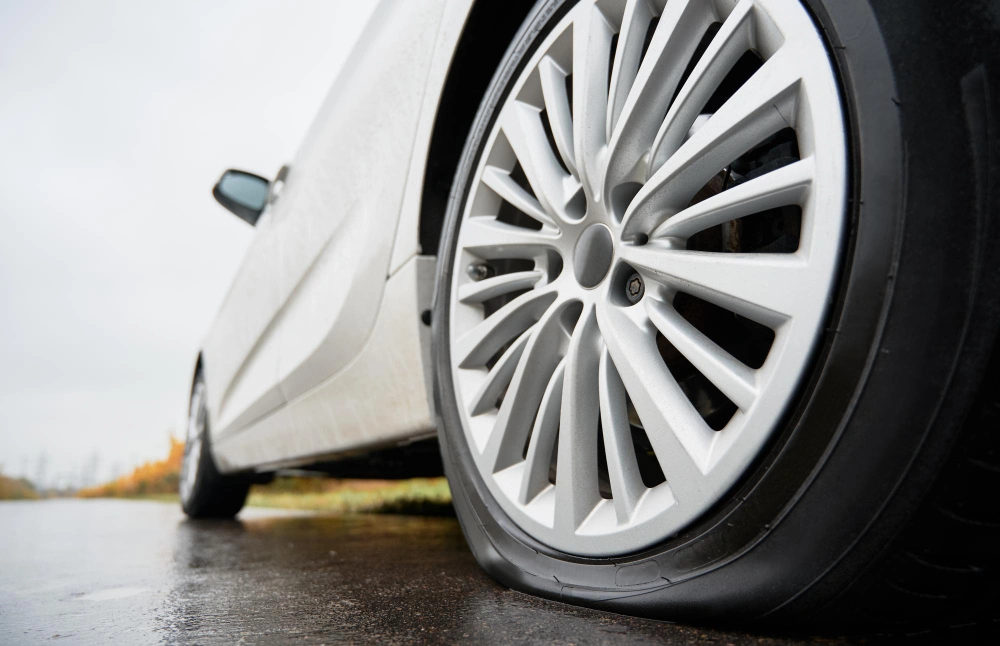
A damaged tire does not always need to be replaced. Some punctures can be repaired safely, while sidewall damage, large holes and internal tire damage usually require replacement.
The correct choice depends on the location, size and severity of the damage, as well as the tire’s age and remaining tread depth.
Quick Answer
A tire may be repairable when the puncture:
- Is located in the central tread area
- Is relatively small
- Has not damaged the sidewall or shoulder
- Has not been driven while flat
- Has no exposed cords, bulges or internal damage
You should replace the tire when it has sidewall damage, a large puncture, a bulge, exposed cords, severe tread wear or damage caused by driving on it while flat.
When Can a Tire Be Repaired?
A professional tire repair may be possible when a nail or screw creates a small puncture within the main tread area.
The technician must remove the tire from the wheel and inspect it from the inside. A proper repair normally seals both the puncture channel and the inner liner.
A tire may qualify for repair when:
- The puncture is within the tread area
- The damage is limited to one small spot
- The internal structure remains intact
- The tire still has safe tread depth
- Previous repairs are not too close to the new puncture
Simply inserting an external plug without inspecting the inside may not reveal hidden damage.
When Should a Tire Be Replaced?
Sidewall or Shoulder Damage
The sidewall flexes continuously while driving and cannot usually be repaired safely. Cuts, punctures or cracks in this area weaken the tire’s structure.
Damage near the outer edge of the tread may also require replacement because it is too close to the sidewall.
Sidewall Bulge or Bubble
A bulge means the internal cords have been damaged, often after hitting a pothole or curb.
The weakened area may rupture without warning. A tire with a bulge should be replaced rather than repaired.
Large or Irregular Puncture
Large holes, tears and irregular damage may be too difficult to seal reliably. The technician will measure the puncture and inspect the surrounding rubber before determining whether repair is possible.
Exposed Cords
Visible fabric or metal cords indicate serious structural damage. The tire is no longer safe and must be replaced.
Damage From Driving While Flat
Driving on a flat or severely underinflated tire can crush and weaken the sidewall internally.
The exterior may appear repairable, but the inside can contain rubber debris, creases or broken cords. This is why the tire must be removed from the wheel for inspection.
Insufficient Tread Depth
Repairing a worn tire may not be worthwhile. If the tread is near the legal or recommended replacement level, installing a new tire is generally the safer choice.
Dry Rot or Cracking
Age, heat and environmental exposure can cause cracks in the tread and sidewalls. Widespread cracking indicates deterioration that a puncture repair cannot correct.
Can a Sidewall Puncture Be Repaired?
No. A puncture in the sidewall should generally not be repaired.
The sidewall carries the vehicle’s load and bends every time the tire rotates. A repair in this area may not withstand the repeated movement and pressure.
The same concern applies to damage on the tire shoulder, where the tread curves into the sidewall.
Should You Repair a Tire With a Nail in It?
Do not remove the nail immediately unless you are already at a repair shop. It may be slowing the air loss by partially sealing the hole.
Check the tire pressure and avoid driving when it is visibly low. A nail in the central tread may be repairable, but only after the tire has been inspected internally.
A nail near the sidewall will usually mean the tire needs replacement.
Is a Tire Plug a Permanent Repair?
An external plug by itself is often considered a temporary solution because it does not seal the tire’s inner liner or allow inspection for internal damage.
A more complete professional repair typically involves a patch-and-plug combination installed from inside the tire.
The appropriate method depends on the puncture and the tire manufacturer’s repair guidelines.
Do You Need to Replace All Four Tires?
Not always. Whether you can replace one tire depends on:
- The tread depth of the remaining tires
- The vehicle’s drivetrain
- The tire size and model
- Manufacturer requirements
- The difference in tire circumference
All-wheel-drive vehicles can be more sensitive to tread-depth differences. A significant mismatch may place extra strain on drivetrain components.
In some cases, replacing two tires on the same axle or all four tires may be recommended.
What Should You Do When a Tire Is Damaged?
- Reduce speed and avoid sudden braking.
- Pull over somewhere safe.
- Check for visible cuts, bulges or pressure loss.
- Install the spare tire if necessary.
- Avoid driving on a flat tire.
- Have the damaged tire inspected from the inside.
Do not rely only on the appearance of the outside surface.
Tire Repair in Calgary
Heritage Auto Pro provides professional tire repair in Calgary near Chinook Mall.
Our technicians can remove and inspect the tire, determine whether it can be repaired safely, and recommend replacement when the damage affects the sidewall or internal structure.
Schedule a tire inspection if you notice a puncture, pressure loss, sidewall bulge or visible tire damage.
Frequently Asked Questions
How do I know whether my tire can be repaired?
The tire must be removed and inspected. Small punctures in the central tread may be repairable, while sidewall, shoulder and internal damage usually require replacement.
Can I drive with a slow tire leak?
A short distance may be possible if the tire remains properly inflated, but the leak can worsen. Have it inspected as soon as possible.
Can two punctures in one tire be repaired?
Possibly, but it depends on their size and distance from each other. Closely positioned punctures can weaken the repair area.
Should I replace a tire after hitting a pothole?
Replace it if there is a sidewall bulge, exposed cords, deep cuts or internal damage. A professional inspection can determine whether the tire and wheel remain safe.
Is tire repair cheaper than replacement?
Yes, when the tire qualifies for a safe repair. However, repairing a tire with unsafe damage can create a greater risk than replacing it.