


How Does Road Salt Damage Your Car During Calgary Winters?
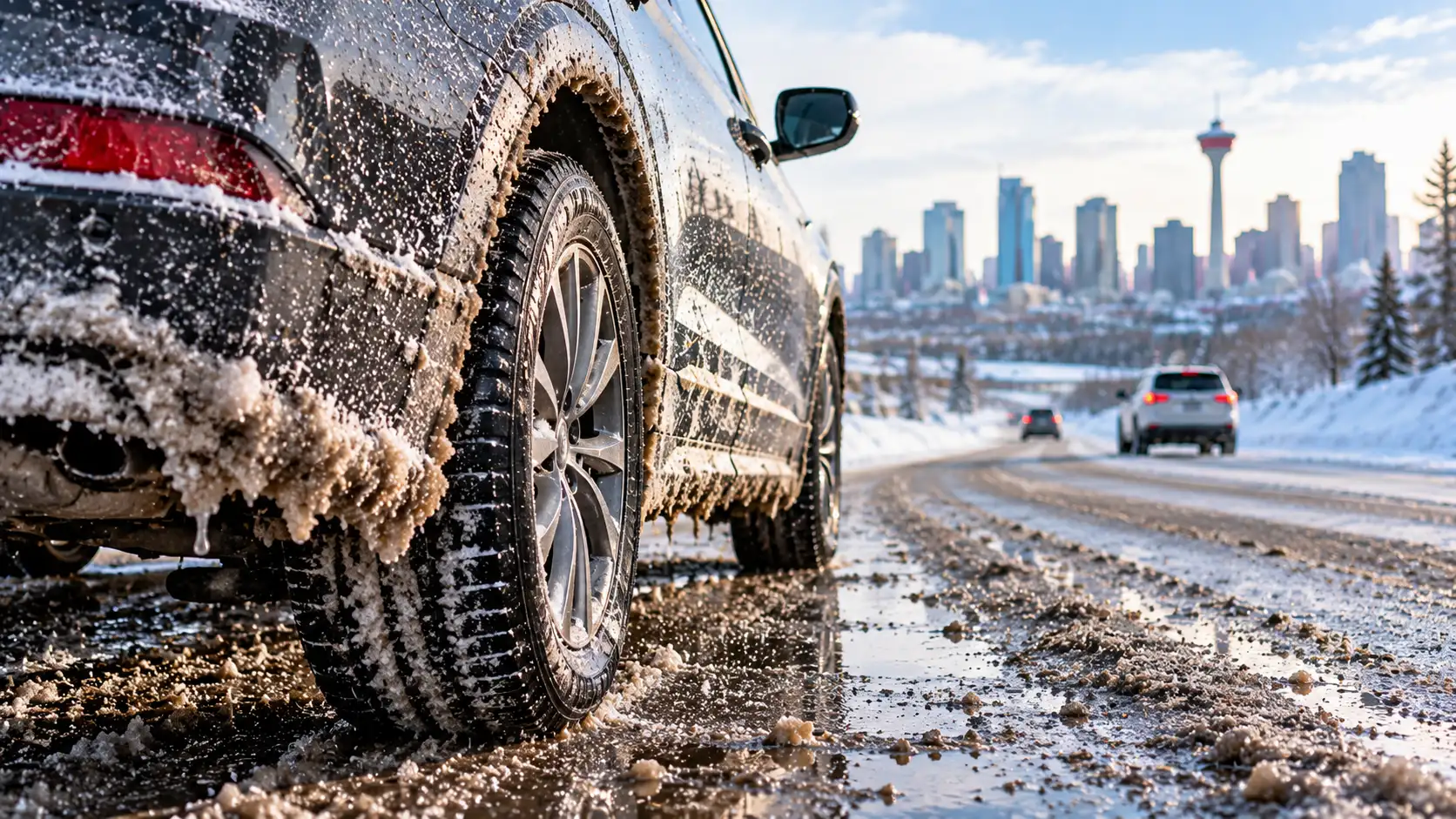
After driving through winter slush, you may notice a white, chalky coating along your doors and wheel arches. That residue can be more than a cleaning problem.
Road salt speeds up corrosion when it mixes with moisture and reaches exposed metal. Over time, it can damage body panels, brake lines, suspension parts and other components underneath your car.
Regular cleaning and inspections can help reduce the damage before visible rust becomes a larger repair.
Does Calgary Use Salt on Winter Roads?
Yes. Calgary uses road salt, brines and abrasives to manage winter road conditions. The materials used depend on road-surface temperatures and the weather.
The City’s road salt management plan includes rock salt, salt brines, sanding chips and calcium chloride. This means your vehicle can encounter corrosive residue even when you do not see loose salt on the pavement.
As you drive, your tires and surrounding traffic spray salty water onto the body and underneath the vehicle.
Why Does Road Salt Cause Rust?
Rust forms when iron or steel reacts with oxygen and moisture. Dissolved salt makes that corrosion process happen faster.
Paint and protective coatings help keep moisture away from metal. However, stone chips, scratches, damaged coatings and exposed edges create places where corrosion can begin.
Salty slush can also collect in seams and hard-to-reach areas. Some liquid de-icers remain wet longer and reach small crevices, extending contact with vulnerable components.
Damage usually develops through repeated exposure. A single drive on a treated road does not mean your car is ruined, but leaving buildup in place throughout winter increases the risk.
Which Parts of Your Car Are Most Vulnerable?
1. The Undercarriage
The underside receives a large amount of spray from the road. Salt and dirt can collect around mounting points, brackets, seams and protective panels.
Because these areas are difficult to see, corrosion may develop without an obvious change in the car’s appearance.
An exterior wash alone may leave much of this buildup untouched.
2. Brake Lines and Brake Components
Corrosion can affect metal brake lines and exposed brake hardware. Serious deterioration can eventually lead to leaks or interfere with proper brake operation.
This is different from the light surface rust that sometimes forms on brake rotors overnight. Brake-line corrosion needs a proper assessment.
If you notice fluid leaking, a soft brake pedal or reduced braking, stop driving and arrange assistance. Heritage AutoPro’s brake inspection and repair service includes checks of relevant brake components.
3. Suspension Parts and Mounting Points
Road spray reaches suspension arms, springs, fasteners and related mounting areas.
Light surface rust does not automatically mean a part has failed. However, deeper corrosion can weaken metal and make future repairs more difficult.
A technician can assess the extent of deterioration during a suspension inspection. AAA identifies the undercarriage and suspension among the areas vulnerable to road-salt corrosion.
4. Body Panels and Wheel Arches
Lower doors, rocker panels and wheel arches regularly collect salty slush.
Watch for bubbling paint, rust around stone chips and corrosion along panel edges. Small areas are generally easier to address before rust spreads beneath the finish.
5. Exhaust Parts and Hardware
Exposed exhaust pipes, clamps and hangers can also corrode. A new rattle or louder exhaust sound deserves attention, especially if something appears loose underneath the car.
Never crawl under a vehicle supported only by a jack to investigate.
How Can You Protect Your Car From Road Salt?
Wash Throughout Winter
Do not wait until spring to remove months of salt buildup.
As a practical starting point, wash your vehicle about every two weeks during regular salt exposure, and more often after heavily salted or slushy journeys. Choose a wash that includes an underbody rinse. AAA recommends this approach to reduce winter salt accumulation.
Adjust the timing to your driving conditions and use a facility suitable for winter washing.
Include the Wheel Arches and Underside
Pay attention to areas where dirty slush collects. Follow the vehicle manufacturer’s washing instructions and avoid directing excessive pressure at seals, electrical connectors or damaged coatings.
AAA cautions that excessive pressure during underbody cleaning can force deposits into small openings.
Protect the Paint
Use a suitable automotive wax or sealant as directed, and have paint chips assessed before rust spreads.
Paint protection helps maintain the exterior finish, but it does not protect every component underneath the car.
Ask About Rust Protection
If you are considering a rustproofing treatment, discuss your vehicle’s condition, existing corrosion protection and manufacturer guidance first.
The right treatment depends on the vehicle and product. Applying a coating over existing damage does not repair weakened metal.
Arrange Regular Checks
During routine car maintenance, ask whether there are signs of corrosion around brake lines, suspension components and underbody mounting points.
An inspection can help distinguish cosmetic surface rust from deterioration that needs action.
Does a Heated Garage Prevent Salt Damage?
A garage offers shelter, but it does not remove road salt.
When snow melts off a salty vehicle, moisture can remain in seams and around components. Warmer conditions can also speed up corrosion while salt and moisture are present.
Washing away the residue still matters, even if you park indoors.
Should You Wash the Car Again in Spring?
Yes. Give the vehicle a thorough wash, including the underside, after the main winter salt exposure ends.
Remaining deposits can continue contributing to corrosion when they become wet. AAA recommends a final undercarriage cleaning in spring to remove leftover winter contamination.
Spring is also a useful time to inspect paint chips, wheel arches and visible areas underneath the car.
Frequently Asked Questions
Can road salt damage a newer car?
Yes. Modern protective coatings reduce the risk, but stone chips, damaged coatings and exposed components can still allow corrosion to develop.
Does washing remove rust that has already formed?
No. Washing removes salt and dirt that contribute to further corrosion. Existing rust needs assessment and, where appropriate, repair or treatment.
Is all rust underneath a car dangerous?
No. Light surface rust and deep structural corrosion are different. An inspection is needed to judge whether a component remains sound.
Can I tell how much salt damage there is by looking at the paint?
Not reliably. The body may look clean while corrosion develops underneath. Checking the undercarriage is an important part of assessing winter wear.
Keep Winter Corrosion From Going Unnoticed
Regular washing helps remove salt, while maintenance checks can identify damage in places you cannot easily see.
If you notice rust buildup, new noises, fluid leaks or changes in braking and handling, contact Heritage AutoPro or call 403-253-1210 to arrange an inspection at our Calgary shop near Chinook Centre.