



Causes of a Car Heater Blowing Cold Air in Calgary
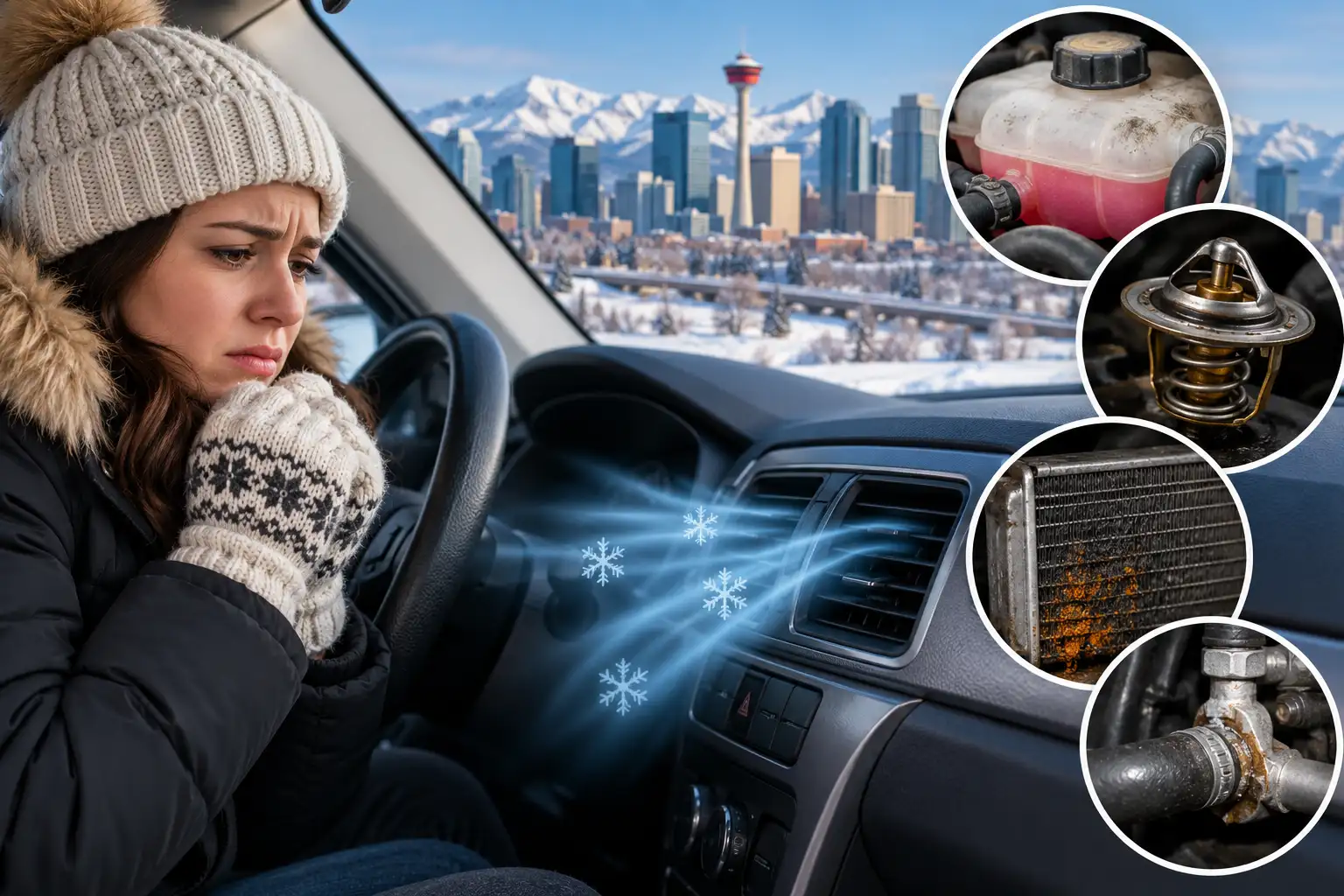
A working heater does more than keep the cabin comfortable. It also helps the defroster clear moisture and ice from the windshield. When the vents blow cold air after the engine has warmed up, the problem may involve the cooling system, heater core, airflow system, or electronic climate controls.
The first useful distinction is whether air is moving through the vents. Cold airflow points toward a heat-transfer or temperature-control problem. Little or no airflow points more strongly toward the blower, resistor, filter, wiring, or duct controls. Heritage Auto Pro provides auto heating repair in Calgary for both types of concern.
Low Coolant or a Cooling System Leak
Most gasoline and diesel vehicles warm the cabin by passing hot engine coolant through a small radiator called the heater core. If the coolant level is too low, there may not be enough hot fluid circulating through the core.
Low coolant is not normal consumption. It can indicate a leak at a hose, radiator, water pump, reservoir, heater core, gasket, or another component. Clues include a sweet smell, visible coolant, frequent top-ups, engine-temperature changes, or damp carpet near the dashboard.
Never open a pressurized cooling-system cap while the engine is hot. Hot coolant can cause serious burns. If the temperature gauge rises, a warning appears, or steam is visible, stop driving safely and arrange service.
A Thermostat Stuck Open
The thermostat helps the engine reach and maintain its normal operating temperature. If it sticks open, coolant may circulate through the radiator too soon. The engine warms slowly, the temperature gauge may remain lower than normal, and cabin heat can stay weak during highway or cold-weather driving.
A thermostat problem can also affect fuel economy because the engine-management system may keep operating as though the engine is still warming up. Proper testing should confirm the temperature behaviour before the part is replaced.
A Restricted or Leaking Heater Core
Sediment, corrosion, incompatible coolant, or stop-leak products can restrict flow through the heater core. Heat may be weak on both sides of the cabin, change with engine speed, or disappear at idle.
A leaking heater core may cause a sweet smell inside, greasy film on the windshield, unexplained coolant loss, or damp carpeting. Windshield film and poor defrost performance can reduce visibility, so this problem should not be delayed.
Air Trapped in the Cooling System
Air pockets can interrupt coolant flow through the heater core after a leak, repair, or incorrect refill. The temperature may change as the engine speed changes, and gurgling may be heard behind the dashboard.
Bleeding procedures vary by vehicle. Some systems require special filling equipment or scan-tool control of valves and pumps. Repeatedly adding coolant without correcting the leak or trapped-air cause is not a lasting repair.
A Blend Door or Actuator Fault
The climate-control system uses doors inside the HVAC housing to direct air and mix warm and cool airflow. A failed actuator, broken door, wiring issue, or control-module fault can leave the system stuck on cold.
Signs include clicking behind the dashboard, temperature that changes on only one side, incorrect airflow direction, or controls that do not respond. Modern dual-zone systems may show different symptoms for the driver and passenger sides.
Blower Motor Resistor or Electrical Problems
If little or no air comes from the vents, the engine may be producing heat but the blower is not moving it into the cabin. Possible causes include a failed motor, resistor or control module, fuse, relay, connector, switch, or wiring fault.
A blower that works only on one speed, stops intermittently, squeals, or changes when the vehicle hits a bump needs electrical diagnosis. Auto diagnostics can help separate a control fault from a mechanical airflow restriction.
A Restricted Cabin Air Filter
A heavily clogged cabin filter reduces airflow through the heater and defroster. The air may still be warm, but the volume is too low to heat the cabin or clear the glass effectively. Filters can collect dust, leaves, road debris, and moisture.
Replacement timing depends on the vehicle and driving conditions. Check the maintenance schedule, and inspect the filter sooner if airflow drops or the vents develop a musty smell.
Water Pump or Engine Related Problems
Less commonly, poor coolant circulation can involve a damaged water-pump impeller, slipping drive belt, internal engine leak, or other cooling-system problem. These faults may occur with overheating, coolant loss, noise, or changing heater output.
Because cabin heat and engine cooling share components, a no-heat complaint should not be treated as comfort-only until the engine temperature and coolant system have been checked.
When a Heater Problem Needs Immediate Attention
Stop and seek assistance if you notice:
- An overheating warning or rising temperature gauge
- Steam from under the hood
- Rapid coolant loss
- A strong coolant smell with wet carpet or windshield film
- Electrical burning smells or smoke from the vents
- A defroster that cannot maintain safe windshield visibility
For routine prevention, a winter car service package can check coolant, hoses, belts, battery condition, wipers, and other cold-weather items before a Calgary freeze.
Car Heater Questions
Why is the heat warm while driving but cold at idle?
This pattern can occur with low coolant, trapped air, restricted heater-core flow, or weak coolant circulation. The cooling system should be checked before the engine overheats.
Why does one side blow hot and the other side blow cold?
Dual-zone systems use separate doors or actuators. A control, actuator, or door fault can affect only one side, although restricted coolant flow may also reduce overall heat.
Can a bad thermostat cause poor fuel economy?
Yes. If the engine does not reach its intended operating temperature, the control system may use more fuel and cabin heat may remain weak.
Is no airflow the same as no heat?
No. No airflow points toward the blower, electrical controls, filter, or duct system. Strong but cold airflow points toward coolant flow or temperature-mixing controls.
Book Car Heater Repair in Calgary
If your heater stays cold, the defroster is weak, or airflow has stopped, Heritage Auto Pro can test the cooling system, heater performance, blower circuit, and climate controls. Book service near Chinook Centre or call 403-253-1210.