


Alberta Out of Province Inspection Checklist
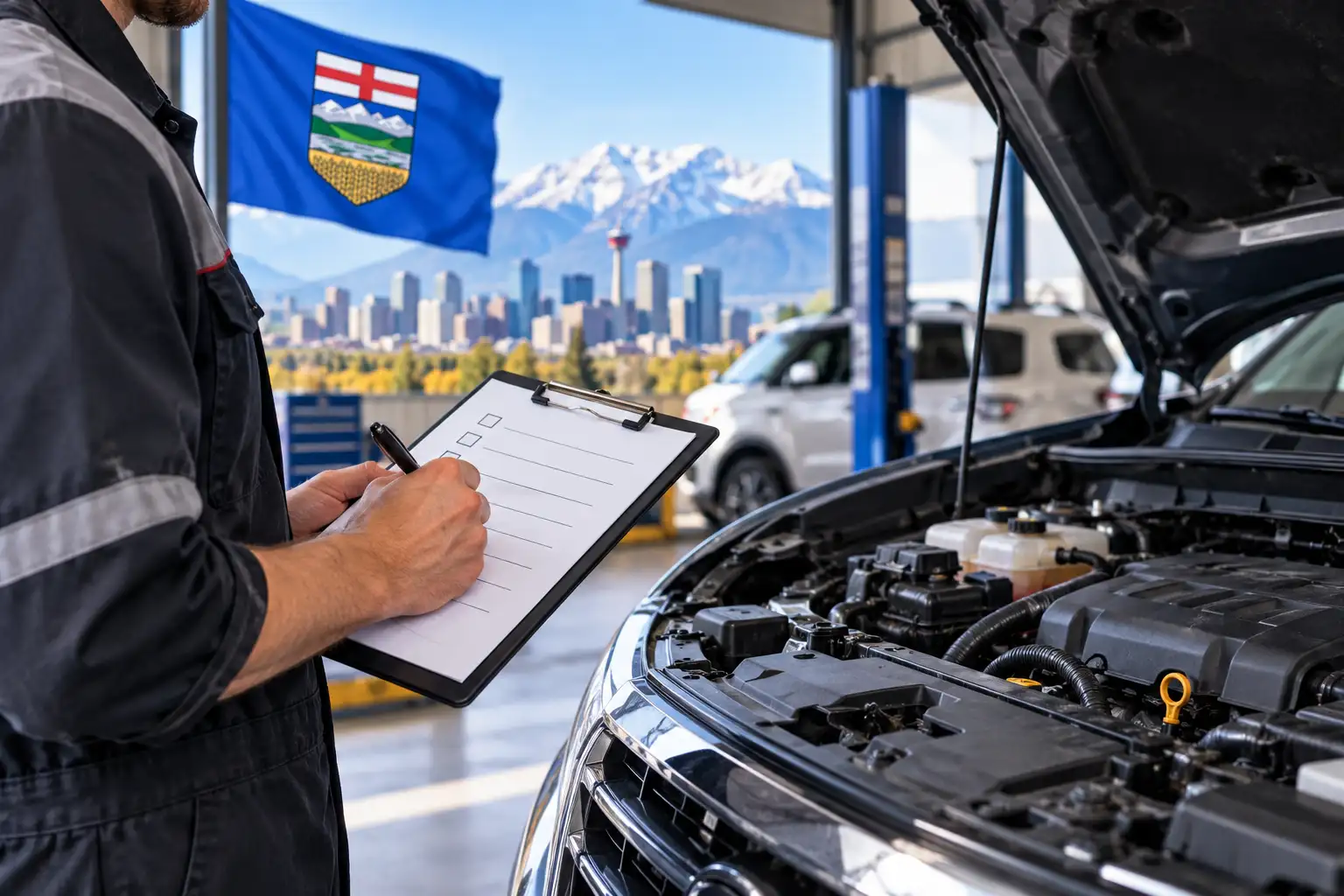
Most vehicles brought into Alberta from another province or country must pass an Out of Province vehicle inspection before Alberta registration can be completed. The inspection is more detailed than a quick maintenance check. A licensed facility and qualified inspection technician compare the vehicle with Alberta’s required mechanical and structural standards.
Preparing the paperwork and correcting obvious defects can reduce delays, but no pre-check can guarantee a pass. Heritage Auto Pro provides Out of Province vehicle inspections in Calgary near Chinook Centre.
Confirm Whether Your Vehicle Needs an Inspection
A vehicle that was last registered outside Alberta usually needs an OOP inspection. Some vehicles may qualify for an exemption based on where they were previously registered, ownership, vehicle age, mileage, or other conditions.
Ask an Alberta registry agent to confirm the requirement before booking. The registry can check the vehicle’s status and issue the Request for Vehicle Inspection Form when an inspection is required.
Get the Request for Vehicle Inspection Form
The Alberta process begins at a registry office. Purchase the Request for Vehicle Inspection Form and bring the original form with the vehicle to the licensed inspection facility.
According to the Government of Alberta, the request form itself does not expire. It must be presented for the inspection or re-inspection. This should not be confused with the deadlines that apply after an inspection is completed.
Bring any documents the registry or inspection facility requests, along with keys for locks or accessories that may need to be checked. If the vehicle was imported from outside Canada, additional federal import documentation may apply.
Use a Licensed Alberta Inspection Facility
Out of Province inspections must be completed at a facility licensed under Alberta’s Vehicle Inspection Program and by an appropriately licensed journeyperson technician. A general mechanical inspection from another shop cannot replace the official process.
Heritage Auto Pro can also discuss approved repairs when the inspection identifies a defect. You may choose where repairs are completed, but the vehicle must return for the required re-inspection within the applicable deadline.
What the Inspection Commonly Covers
The technician follows the provincial inspection manual rather than a shop-created checklist. The review includes safety, mechanical, and structural areas such as:
- Vehicle identification and required documentation
- Brakes and parking brake operation
- Steering and suspension components
- Wheels, tires, hubs, and bearings
- Headlights, signals, brake lights, and other required lamps
- Windshield, windows, mirrors, wipers, and washers
- Seat belts, seats, doors, latches, and safety equipment
- Exhaust components and visible emission-control equipment
- Fuel system and visible leaks
- Frame, body structure, mounts, and visible collision damage
- Horn, speedometer, warning indicators, and other required controls
Inspection requirements depend on the vehicle type and configuration. Modified, right-hand-drive, antique, rebuilt, or imported vehicles may require additional attention.
Common Problems Worth Checking Before the Appointment
The following items are practical pre-appointment checks. They are not a substitute for the official inspection.
Warning lights
Do not ignore illuminated brake, ABS, airbag, steering, or other safety-system warnings. Clearing a fault code does not correct the underlying condition, and the light may return during inspection.
Lights and electrical equipment
Check low and high beams, signals, hazards, brake lights, reverse lights, licence-plate lamps, and the horn. Lens damage, corrosion, incorrect bulbs, or wiring faults can affect operation.
Windshield and visibility
Inspect the windshield for damage in critical viewing areas. Confirm that the wipers, washers, mirrors, window controls, and defroster operate correctly.
Tires and wheels
Look for low tread, uneven wear, sidewall damage, incorrect sizing, loose or missing hardware, and a pressure warning. Uneven wear can also indicate a steering, alignment, or suspension issue.
Brakes
Grinding, pulling, vibration, warning lights, fluid leaks, or a soft pedal should be diagnosed before the inspection. The parking brake must also hold and release correctly.
Steering and suspension
Clunks, excessive play, broken springs, leaking shocks, damaged bushings, and loose joints can affect roadworthiness. A vehicle may feel acceptable in everyday driving while still having measurable wear outside the permitted limit.
Leaks and exhaust condition
Visible fuel, brake-fluid, coolant, transmission-fluid, or significant oil leaks require attention. Exhaust leaks, missing supports, damaged components, or unsafe modifications may also need repair.
Body and structure
Inspect doors, hood and trunk latches, bumpers, mounts, and visible structural areas. Corrosion or previous collision repairs can require closer assessment when they affect strength or safety-system mounting points.
Heritage Auto Pro’s auto repair services can address approved mechanical work when defects are identified.
What Happens if the Vehicle Fails
The facility must provide a signed Record of Inspection whether the vehicle passes or fails. The report identifies the items that require correction.
Alberta requires repairs and re-inspection within 10 days of the original inspection if you want the follow-up limited to the required repairs. If the vehicle is not returned within that period, a new full inspection is required. Confirm re-inspection pricing and scheduling with the facility. Heritage Auto Pro lists current starting prices on its service prices page.
What Happens After the Vehicle Passes
After a pass, you receive the Out of Province Vehicle Inspection Certificate and Record of Inspection. The certificate must be presented to an Alberta registry agent within 14 days of the completed inspection. If the certificate is presented after that period, it will not be accepted and the vehicle will need another full inspection.
These deadlines make scheduling important. Allow enough time for possible repairs, re-inspection, and a registry visit.
Out of Province Inspection Questions
Does the Request for Vehicle Inspection Form expire?
The Government of Alberta states that the request form does not expire. The 10-day repair and re-inspection period and the 14-day certificate deadline begin after the inspection process reaches those stages.
Can I have repairs completed at another shop?
Yes. Alberta allows the owner to choose where repairs are completed. The vehicle must still be re-inspected by a licensed facility within the required period.
Can a vehicle fail even if it drives normally?
Yes. Measurable wear, lighting faults, warning-system problems, structural concerns, glass damage, leaks, or other regulated defects may not be obvious during a short drive.
Is an OOP inspection the same as a pre-purchase inspection?
No. An OOP inspection checks compliance with provincial requirements for registration. A pre-purchase inspection helps a buyer understand the vehicle’s condition and possible future costs. The scopes and purposes are different.
Book an OOP Inspection in Calgary
Bring your Request for Vehicle Inspection Form and vehicle to Heritage Auto Pro near Chinook Centre. Our licensed inspection service can complete the required assessment, explain the results, and discuss repairs if they are needed. Call 403-253-1210 to confirm documents and book an appointment.