
Heritage AutoPro and Tire
Tire Season is Here - Find the Perfect Fit!
Shop Tires Now
Heritage AutoPro and Tire
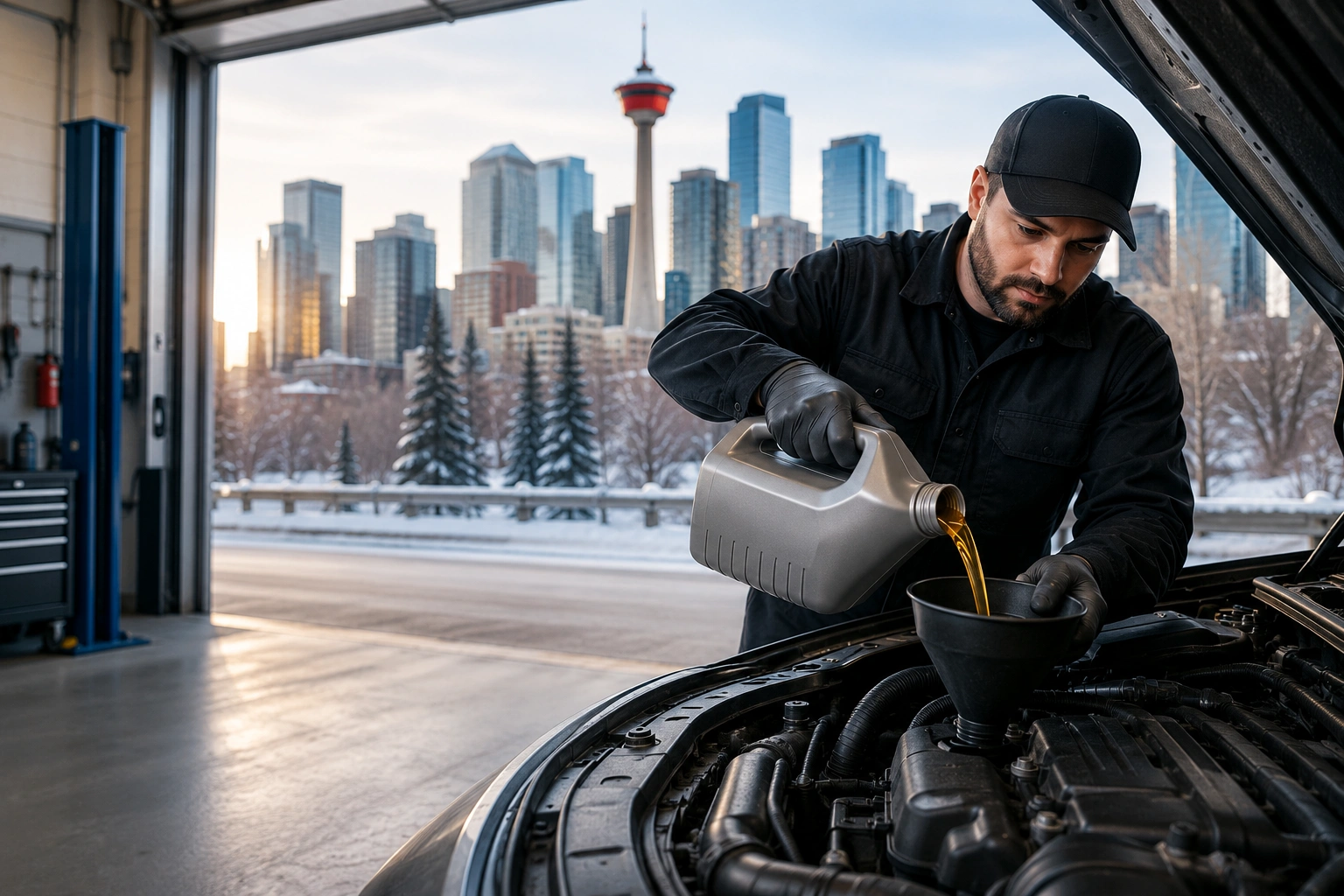
Your vehicle’s engine depends on clean oil to run smoothly, stay protected, and perform efficiently. But with Calgary’s changing weather, heavy traffic, and cold winters, many drivers wonder how often they should actually schedule an oil change.
The short answer is: most vehicles should get an oil change every 5,000 to 8,000 km, depending on the type of oil, your driving habits, and your vehicle manufacturer’s recommendations. However, Calgary driving conditions can sometimes require more frequent maintenance.
Engine oil plays a major role in protecting your vehicle. It lubricates moving engine parts, reduces heat, prevents buildup, and helps your engine perform properly over time.
When oil becomes dirty or breaks down, it can no longer protect the engine effectively. This increases wear and tear and may eventually lead to expensive repairs.
Routine oil changes help:
Ignoring oil changes for too long can cause serious engine damage that is often expensive to fix.
Calgary drivers deal with unique conditions throughout the year. Cold winters, temperature swings, stop-and-go traffic, and road dust can all affect engine oil faster than normal.
During Calgary winters, engine oil thickens in freezing temperatures. Cold starts put extra strain on the engine, especially if the oil is old or dirty.
If you mainly drive short distances around Chinook, downtown Calgary, or nearby neighborhoods, your engine may not fully warm up. This can cause moisture buildup inside the engine and reduce oil life.
Stop-and-go traffic increases engine stress and heat, which can cause oil to break down more quickly.
Road debris, dust, and changing weather conditions can also impact your vehicle’s overall performance and maintenance needs.
Because of these factors, many Calgary drivers benefit from more regular oil inspections and maintenance.
Most newer vehicles use synthetic oil because it lasts longer and performs better in extreme temperatures.
In general:
However, your owner’s manual should always be the primary guide for your specific vehicle.
If you frequently drive in harsh Calgary conditions, towing, or heavy traffic, it’s often safer to stay on the lower end of the mileage range.
Even if you haven’t reached your mileage interval, your vehicle may still show warning signs.
Watch for:
If you notice any of these issues, it’s a good idea to have your vehicle inspected as soon as possible.
Yes. Delaying oil changes can lead to:
Many major engine problems begin with neglected maintenance. A simple oil service is much more affordable than major engine repairs later on.
Regular oil changes are one of the easiest and most important ways to protect your vehicle year-round. Calgary’s weather conditions can put extra stress on engines, which makes preventative maintenance even more important.
Whether you drive daily through Chinook traffic, commute long distances, or only use your vehicle occasionally, staying consistent with oil changes helps keep your car reliable and efficient.
At Heritage AutoPro & Tires, we provide professional oil change services for all makes and models in Calgary near Chinook. Our experienced technicians help drivers maintain their vehicles with quality oil, proper inspections, and honest recommendations based on driving conditions and manufacturer guidelines.
Whether you need routine maintenance, a seasonal inspection, or help determining the right oil for your vehicle, our team is here to help keep your car running smoothly.
Your owner’s manual will recommend the correct oil type and viscosity. A professional technician can also help determine the best option for Calgary driving conditions.
While some vehicles have flexibility, regularly exceeding oil change intervals can increase engine wear and reduce performance over time.
Yes. Synthetic oil generally lasts longer and performs better in extreme temperatures compared to conventional oil.
Most oil change services can be completed in about 30 to 60 minutes depending on the vehicle and inspection process.
Yes. Fresh oil before winter helps improve cold-weather engine protection and starting performance during freezing temperatures.