
Heritage AutoPro and Tire
Tire Season is Here - Find the Perfect Fit!
Shop Tires Now
Heritage AutoPro and Tire
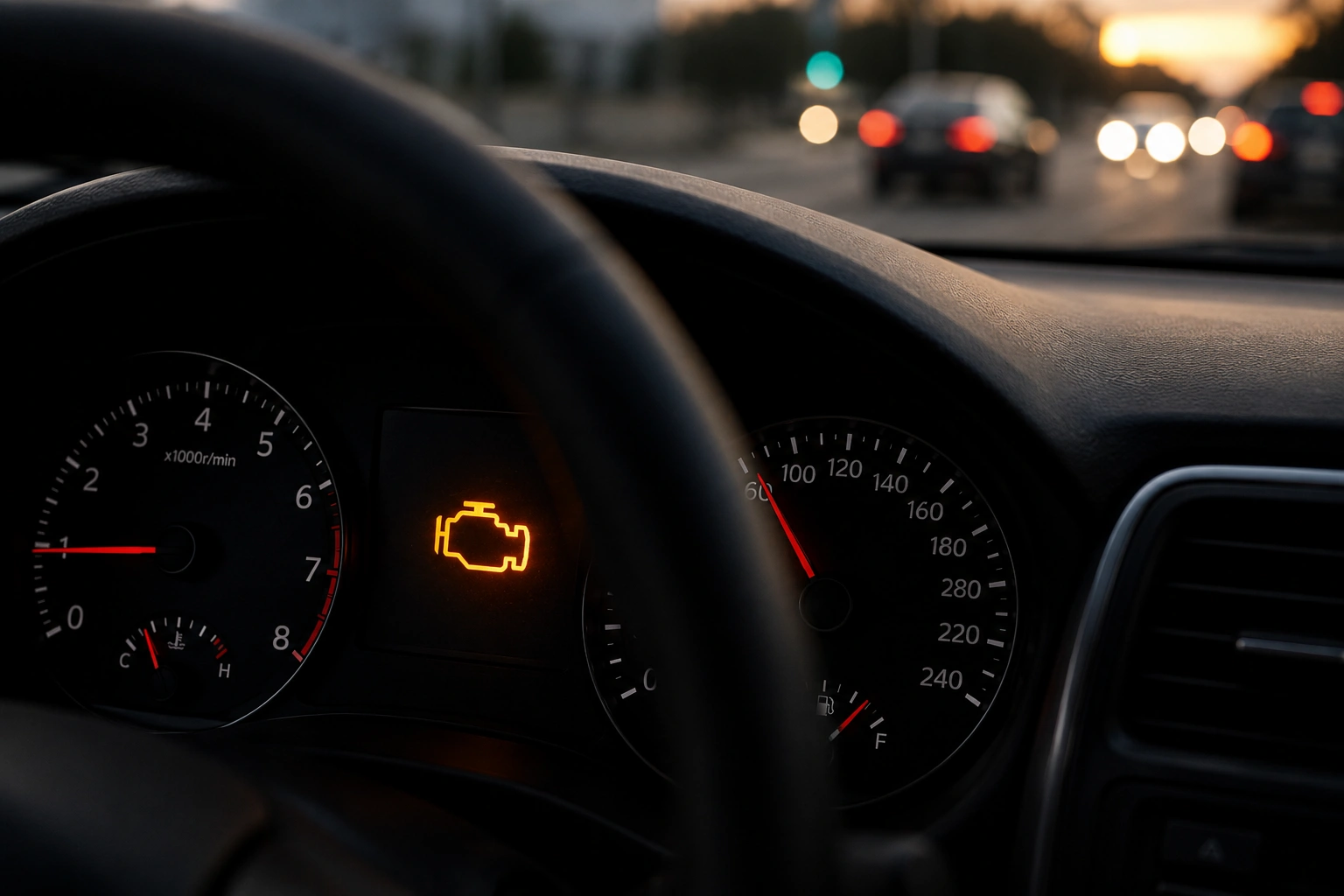
Seeing the check engine light turn on can be frustrating, especially if your vehicle still seems to drive normally. Many drivers continue driving for days or even weeks without getting it inspected, assuming it’s not a serious issue.
However, ignoring a check engine light can sometimes lead to larger and more expensive problems over time. In some cases, it may even affect your vehicle’s safety, fuel efficiency, and overall performance.
Understanding what the check engine light means and why it appears can help Calgary drivers avoid unnecessary repairs and protect their vehicles long-term.
The check engine light is part of your vehicle’s onboard diagnostic system. When the system detects a problem related to the engine, emissions, ignition, fuel system, or other important components, it triggers the warning light on your dashboard.
The light can appear for many reasons, ranging from minor issues to serious mechanical problems.
Some common causes include:
The only way to know the exact cause is through a professional diagnostic inspection.
Not all check engine lights indicate the same level of urgency.
A steady or solid light usually means the vehicle has detected a problem that should be inspected soon, but the vehicle may still be safe to drive temporarily.
Even if the vehicle feels normal, delaying repairs can worsen the issue over time.
A flashing check engine light is more serious and often indicates an active engine misfire or severe problem that could damage the engine or catalytic converter.
If the light is flashing:
Continuing to drive with a flashing light can lead to expensive engine repairs.
Many small problems become larger repairs when left unresolved.
A failing sensor, ignition issue, or fuel system problem can cause the engine to burn more fuel than necessary.
If you notice increased fuel consumption along with the warning light, the issue may already be affecting engine performance.
Certain problems can place extra strain on engine components.
For example:
The longer the issue continues, the greater the risk of long-term damage.
One of the most expensive consequences of ignoring the check engine light is catalytic converter damage.
A misfiring engine or unburned fuel can overheat the catalytic converter, leading to costly replacement repairs.
Many check engine light issues are related to the emissions system.
Ignoring the warning may increase pollution levels and cause the vehicle to fail emissions-related inspections or efficiency standards.
Minor warning signs can eventually turn into major drivability problems.
Ignoring the check engine light may increase the risk of:
No driver wants to be stranded unexpectedly, especially during Calgary winters.
Yes. Surprisingly, a loose or damaged gas cap is one of the most common causes of a check engine light.
The fuel system relies on proper pressure sealing, and even a small leak can trigger the warning light.
If tightening the gas cap does not turn the light off after a few driving cycles, the vehicle should still be inspected professionally.
Modern vehicles rely heavily on electronic systems and sensors, making it difficult to identify the issue without proper diagnostic equipment.
Professional diagnostics help:
Simply clearing the warning light without fixing the underlying issue will usually cause the light to return.
At Heritage AutoPro & Tires, we provide professional check engine light diagnostics and auto repair services for Calgary drivers near Chinook. Our experienced technicians use advanced diagnostic tools to identify warning light issues accurately and recommend the right repair solutions before small problems become major repairs.
Whether your vehicle has a solid or flashing check engine light, our team is here to help keep your car running safely and efficiently.
A solid light may allow short-term driving, but the vehicle should still be inspected soon. A flashing light requires immediate attention.
Sometimes. Minor issues like a loose gas cap may clear after several driving cycles if the problem is resolved.
No. Some causes are simple and inexpensive, while others may be more serious. Proper diagnostics are necessary to determine the issue.
Reduce driving immediately and have the vehicle inspected as soon as possible to prevent engine or catalytic converter damage.
In some cases, poor fuel quality or fuel contamination can contribute to engine performance issues and warning lights.